
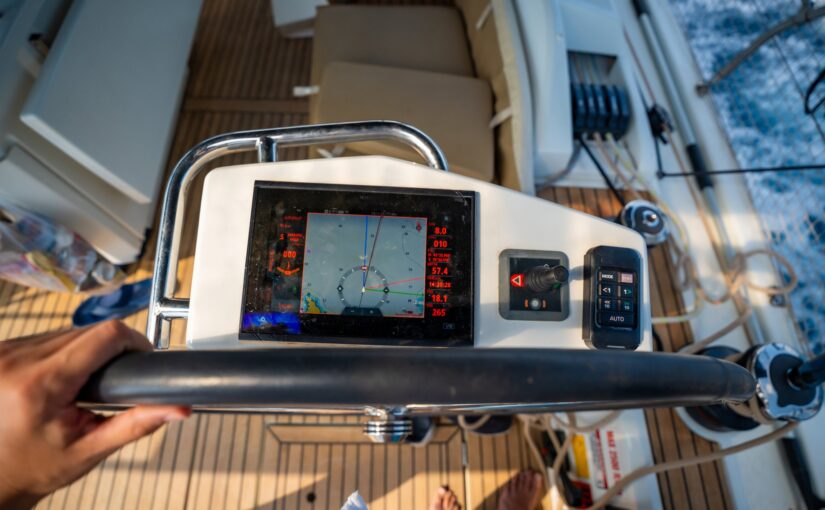

A best boat monitoring system is not a camera and it’s not just a GPS tracker. It’s a connected set of sensors and onboard electronics that tells you what’s happening on your boat when you’re not physically there: shore power loss, battery voltage drift, bilge pump cycles, hatch intrusion, and (for the more capable systems) NMEA2000 engine and tank data.
If your boat sits in a marina slip, on a lift, or even in a driveway on a trailer, the “failure window” is the same: problems happen when nobody is onboard. A charger stops charging, battery voltage collapses, the bilge pump runs longer than normal, and the first sign you get is often a call from the dockmaster.
A good starting point is to map your risks to what you actually want monitored. EverWatch breaks these into practical categories on its EverWatch monitoring features page.
What does a boat monitoring system actually do?
A boat monitoring system is usually a hardwired controller (hub) plus sensors, plus a cellular and/or Wi-Fi data link, plus an app. The best systems do four jobs reliably.
1) Detect water intrusion early
Most owners don’t need a “high water alarm” once water is already above the stringers. They need trend-based warnings: unusual bilge pump runtime, high-frequency cycling, or a float switch trip at a predefined level.
EverWatch’s approach includes bilge pump activity tracking with a runtime threshold (e.g., alerts when the pump runs longer than 4 minutes) described on the EverWatch monitoring features page, and optional high-water detection using a float switch sensor for bilge monitoring.
2) Prevent a power-loss cascade at the dock
Shore power failure is often the first domino:
- Charger stops charging
- House bank falls from ~12.7V resting to the low-12s, then into the 11s
- Automatic bilge pump loses run-time headroom
- Refrigeration stops, A/C stops, batteries continue discharging
A system that can alert you quickly on shore power loss and battery voltage is materially different from a system that only “checks in” occasionally.
EverWatch supports dock power alerts as part of its shore power monitoring features and can be expanded with a dedicated shore power sensor.
3) Reduce theft and unauthorized use risk
Theft is rarely “Ocean’s Eleven.” It’s usually low-effort movement: a boat gets towed off a driveway, a marina theft attempt becomes a successful tow-out, or somebody boards to steal electronics.
Useful functions here are:
- GPS position history (so you can prove movement)
- Geofence alerts (so you know the boat left its normal area)
- Door/hatch open alerts
EverWatch rolls these capabilities into the same ecosystem as power and bilge monitoring. See EverWatch monitoring features and the hardware overview on EverWatch controller kit and sensors.
4) Turn NMEA2000 data into actionable alerts (not just dashboards)
NMEA2000 is the difference between “nice-to-know” and “stop-what-you’re-doing.” If your system can watch engine coolant temperature, oil pressure warnings, run hours, and fuel/tank data, it can surface problems sooner and reduce the guesswork when you get an alert.
EverWatch covers this in its NMEA2000 engine and transmission warnings section.
What to look for in a boat monitor in 2026
Most “best of” lists don’t tell you what actually matters in the field. In 2026, these are the buyer criteria that move the needle.
Connectivity: LTE beats marina Wi-Fi when it matters
Marina Wi‑Fi is fine for streaming music at the dock. It’s not fine as a single point of failure for security alerts.
A modern system should have:
- Primary cellular connectivity (LTE/LTE‑M/5G IoT class)
- Wi‑Fi as a supplemental path, not the only path
- GPS that is onboard (not “phone-assisted”)
EverWatch’s hardware is designed around an always-on monitoring hub. The product and pricing details live on EverWatch controller kit and sensors and the associated EverWatch service plans.
Alert channels: push-only is a weak link
Push notifications are convenient, but they’re not guaranteed delivery. If your boat is taking on water at 2:00 AM, you want redundancy:
- Push notification
- SMS
- Phone call escalation
EverWatch explicitly supports multi-channel alerting (push/SMS/email/phone call) and describes this operationally on its EverWatch monitoring features page.
Expandability: sensors should be easy to add
The “right” sensors vary by boat type:
| Boat type | Higher-priority monitoring | Why it matters |
|---|---|---|
| Center console in a marina slip | Shore power + bilge + battery + geofence | Most losses happen dockside; theft risk is real |
| Cruiser with refrigeration | Shore power + temperature + battery | A dead shore cord can spoil the boat quickly |
| Trailered boat in a driveway | GPS + geofence + entry alerts | Tow-away theft is the main threat |
Pricing model: compare total cost, not just hardware
Monitoring systems are a hardware + subscription purchase. The subscription pays for the cellular link, cloud storage, alert delivery, and app access.
When you compare systems, normalize cost over 3 years:
- Hardware cost
- Subscription cost
- Required add-on sensors
EverWatch’s pricing and setup are transparent on EverWatch controller kit and sensors and EverWatch service plans.
Top boat monitoring systems compared
Below is a practical comparison for the mid-market boater: owners who want real alerts, solid connectivity, and meaningful diagnostics without building a full superyacht security stack.
| System | Typical hardware price point | Typical subscription | Best fit |
|---|---|---|---|
| EverWatch Systems | $329 promo / $429 MSRP | Annual plan via EverWatch | Owners who want hardwired reliability + NMEA2000 depth + multi-channel alerts |
| Siren Marine (Siren 3 Pro class) | Higher hardware cost tier | Higher annual plan tier | Owners already in the Siren ecosystem; Yamaha-adjacent buyers |
| Skyhawk Oversea | Lower-cost self-powered hub | Prepaid annual plans | Owners prioritizing battery-powered convenience and simple monitoring |
| Roam Devices | ~$299 hardware | $60–$90/year plans | Value-focused owners who want core sensors + lower annual cost |
| Boat Command | Low hardware cost tier | ~$8.99/month | Owners who want basic monitoring/control on a budget |
| Vanemar (varies) | Modular | Modular | Owners who want app-centric monitoring and add-on adapters |
A “feature list” is easy to pad. What matters is how the system behaves when it’s unattended:
- How fast does it detect shore power loss?
- What happens if Wi‑Fi drops?
- Can it escalate alerts beyond push?
- Does it log history frequently enough to show a trend (battery decline, bilge cycle count)?
- Does it support NMEA2000 warnings in a way that’s usable (alerts), not just charts?
EverWatch is built around that unattended-boat reality. The most relevant starting point is the EverWatch monitoring features page.
Why NMEA2000 integration matters more than sensor count
Many monitoring systems can tell you “battery low” or “door opened.” Fewer can tell you why your boat is headed toward an expensive day.
NMEA2000 integration can surface:
- Engine over-temp warnings before you run the boat
- Oil pressure and critical alarms (depending on engine data on the backbone)
- Run hours for maintenance scheduling
- Fuel and water tank levels (if the sensors and backbone data are available)
For a mid-market boater, the best outcome is simple: when you get an alert, you know what to do next.
EverWatch supports NMEA2000 data collection and alerting via its NMEA2000 engine and transmission warnings capability.
If you’re comparing systems specifically for engine data and alerts, start with the real list of what EverWatch monitors in the EverWatch monitoring features breakdown.
How to choose the right system for your boat
Use this short decision framework.
Step 1: Decide where the boat spends most of its unattended time
- Marina slip: shore power + bilge + battery + theft/geofence
- On a lift: theft/geofence + entry + battery health
- Trailer at home: GPS + geofence + entry (tow-away prevention)
Step 2: Decide whether you need NMEA2000 alerts or just sensors
If you have a modern outboard setup with a NMEA2000 backbone (or you’re planning one), a monitoring system that can work with that network is usually worth prioritizing. The value isn’t the dashboard; it’s the ability to build alerts and historical evidence around engine and tank health.
Step 3: Select your “minimum viable alerts”
For most owners, the minimum set looks like:
- Shore power lost/regained
- Battery voltage thresholds (12V/24V as applicable)
- Bilge pump runtime / cycle anomalies
- High-water float trip
- Geofence movement
EverWatch’s hardware is designed to be the hub that ties these together. See the EverWatch controller kit for what’s included and how the sensors are expanded.
See how EverWatch compares — view the full feature breakdown on the EverWatch monitoring features page, then review the EverWatch controller kit and sensors to match the hardware to your boat.
Frequently asked questions
Do I need cellular, or can I rely on Wi‑Fi only?
For true unattended monitoring, cellular is the safer default. Wi‑Fi is a great supplement, but marina Wi‑Fi outages (or local router reboots) are common enough that Wi‑Fi-only monitoring can fail at the worst time.
EverWatch service options are explained on the EverWatch service plans page.
What’s the best boat monitoring system for a center console in Florida?
Prioritize shore power monitoring, bilge pump activity, high-water detection, GPS/geofence alerts, and multi-channel alert delivery. Heat and humidity are also worth monitoring in electronics compartments.
EverWatch’s monitoring categories and alerting are outlined on the EverWatch monitoring features page.
Can I add sensors over time instead of buying everything at once?
You should be able to. Most owners start with the hub + core risk sensors (shore power, bilge/high water, battery, GPS/geofence), then expand.
EverWatch’s sensor options start from the EverWatch controller kit and sensors page.
Is a bilge pump counter enough to prevent sinking?
It’s a strong signal, but it’s not the whole picture. The highest-signal combination is bilge pump activity + a dedicated high-water threshold (float switch) + battery voltage tracking + shore power loss alerts.
A simple hardware add-on for high-water detection is a float switch sensor for bilge monitoring.
Do these systems reduce insurance risk?
Many insurers look favorably on tracking and monitoring because it can reduce loss severity (theft recovery, early response to water intrusion, faster detection of shore power loss). Requirements and discounts vary by carrier.
Let’s Make Sure Your Boat Is Fully Protected
If your goal is practical, unattended protection (power, bilge, theft, and NMEA2000 warnings) in one system, start with the EverWatch controller kit and pair it with the right EverWatch service plan for your boat’s usage.
Get started with EverWatch today and secure your boat with confidence.