
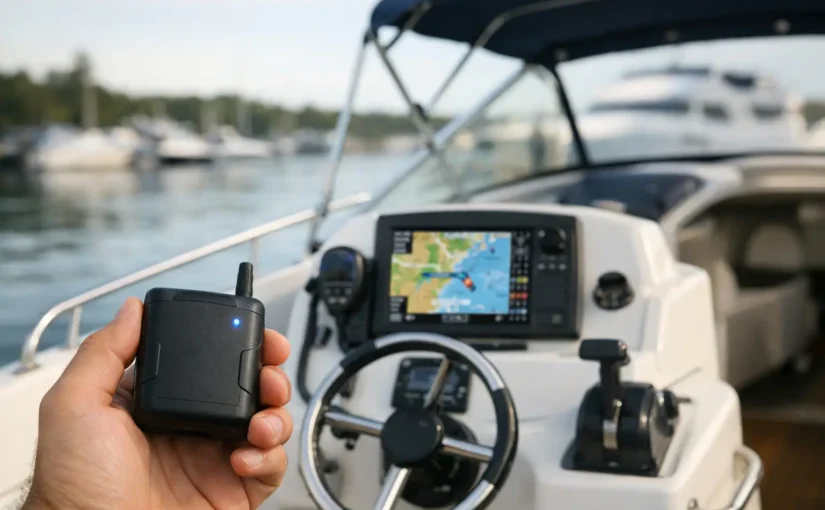
A stolen boat rarely disappears in a movie-style getaway. More often, it gets moved quietly – from a slip to a trailer, from a storage lot to a back road, or just outside the area where anyone would notice. That is where a boat GPS theft tracker earns its keep. But location alone is not the full answer. If you want real protection, you need fast awareness, dependable connectivity, and enough system coverage to know when something is wrong before the boat is gone.
What a boat GPS theft tracker should actually do
At the most basic level, a tracker reports where the vessel is. That sounds simple, but on the water and around marinas, the details matter. A useful tracker needs to confirm position accurately, report movement quickly, and keep sending data even when the boat is unattended for days or weeks.
For many owners, the bigger question is not whether a device can produce a map pin. Most can. The real question is whether it can detect unauthorized movement early enough for you to act. If your boat leaves the marina at 2:14 a.m., a delayed location update at 7:00 a.m. is not protection. It is a record of what already happened.
A serious marine system should do more than passive tracking. It should watch for movement outside a geofence, identify anchor drift when relevant, and send alerts through multiple channels so one missed push notification does not become an expensive problem. On a high-value vessel, those layers matter.
Why boat theft tracking fails in the real world
A lot of owners assume any small GPS unit will solve the problem. That is usually where disappointment starts. Many generic trackers are built for cars, backpacks, or construction equipment. Boats create a different environment.
Power is the first issue. Some battery-powered trackers work for short periods, but boats are often left unattended for long stretches. If the device goes offline before anything happens, the system fails when you need it most. Hardwired power is stronger, but then installation quality matters. Poor wiring, weak mounting, or exposure to moisture can turn a security device into one more point of failure.
Connectivity is another weak spot. A tracker that depends on one network path may go quiet in the exact conditions that matter most. Marinas, dry stacks, and storage yards can all create coverage inconsistencies. A marine-ready system with cellular and Wi-Fi support gives you better odds of staying connected when conditions change.
Then there is the alert problem. Some trackers log movement but do not escalate aggressively. That might be fine for low-risk asset management. It is not fine for theft response. If the system cannot tell you quickly and clearly that your boat has moved, it is missing the point.
The difference between tracking and monitoring
This is the line many buyers miss. A tracker tells you where the boat is. A monitoring system tells you what is happening to the boat.
That difference matters because theft does not always begin with movement. A hatch opens. Shore power drops. Batteries start draining. A bilge pump begins cycling unexpectedly. A door opens at the wrong hour. These events can signal tampering, unauthorized access, or preparation to move the vessel.
A standalone boat GPS theft tracker can help recover a boat after the fact. A full remote monitoring system can help you respond while the situation is developing. That is a very different outcome.
For example, if your vessel leaves a geofenced slip and you receive an immediate push alert, text, email, and phone call, your response window is much better. If that same system also shows power status, battery condition, hatch activity, and water intrusion, you are not making decisions blind. You know whether the event looks like a theft, an authorized move, or a developing onboard problem.
Features that matter most in a boat GPS theft tracker
The best systems are not defined by one spec on a box. They are defined by how they perform unattended, offshore-adjacent, and in rough marina conditions.
Accurate GPS position is table stakes. Geofencing is essential because it turns location into actionable alerts. Multi-channel notifications are just as important. If you are relying on one app alert while traveling, sleeping, or out of service, you are carrying unnecessary risk.
Marine-grade hardware is not marketing fluff here. Salt air, humidity, vibration, heat, and inconsistent shore power expose weak devices fast. A tracker for a boat should be built for that environment, with installation practices that respect marine electrical standards.
Power visibility also deserves more attention than it gets. If the boat loses battery support or shore power, your security system can degrade before theft even occurs. Knowing that early gives you a chance to correct it.
Advanced owners may also want NMEA2000 data integration. That is not strictly required for theft tracking, but it adds context. If engines are powered, fuel levels change, or the vessel shows unexpected system activity, those signals help you judge what is happening in real time.
Where a simple tracker may be enough
There are cases where a basic tracker is a reasonable choice. A small trailerable boat, a short storage period, or a secondary vessel with modest value may not justify a full monitoring stack. If your goal is simply to maintain a location breadcrumb and you accept the trade-offs, a simpler unit can fit.
But you should go in with clear expectations. A basic tracker may not warn you about intrusion. It may not tell you whether batteries are dropping. It may not report shore power loss, high water, or hatch access. And if the device is hidden well but hard to reach for charging, maintenance can become the weak link.
For many owners, that is the tipping point. The question is not just, “Can I track my boat?” The better question is, “Will I know fast enough to stop a loss?”
Why layered protection is stronger than a hidden device
A hidden tracker has value. If thieves do not know it is onboard, it may continue reporting after the vessel is moved. But hidden hardware should be part of a broader protection strategy, not the whole strategy.
Layered protection means you are watching movement, access points, power, and environmental conditions at the same time. It means the system remains useful even if the event is not technically theft. A shore power outage on a hot weekend can damage batteries and onboard systems. A leaking hatch can create interior damage. A failed bilge response can become far more expensive than the loss of a portable accessory.
That is why many owners move away from one-purpose devices and toward integrated monitoring. A boat is not a car parked in a driveway. It is a floating, powered asset exposed to weather, electrical issues, water intrusion, and unauthorized access. Security has to match that reality.
EverWatch approaches this the way marine monitoring should be handled – as constant oversight, not just after-the-fact location history.
How to evaluate a boat GPS theft tracker before you buy
Start with the response question. How quickly will you know if the boat moves? If the answer is vague, keep looking. Security depends on time.
Next, ask how the device stays connected. A tracker that works well in ideal conditions but drops out in storage or at the dock is a weak safeguard. Ask what happens if Wi-Fi is lost, if cellular coverage changes, or if shore power fails.
Then evaluate installation and hardware quality. Boats punish consumer electronics. Marine-grade components, proper wiring practices, and protected placement matter more than flashy app screens.
Finally, look at the full risk picture. If theft is your stated concern, also think about what tends to happen before or alongside theft – unauthorized boarding, battery drain, compartment access, and other signs of tampering. A better system gives you that visibility without forcing you to patch together separate tools.
The smartest use of a boat GPS theft tracker
The smartest use of a boat GPS theft tracker is not as a standalone gadget. It is as one part of a system that watches, detects, and responds. GPS position tells you where the vessel is. Geofencing tells you when it should not be there. Power, bilge, hatch, temperature, and battery data tell you what else may be going wrong at the same time.
That broader view is what gives owners real control when they are away from the boat. It reduces guesswork. It shortens response time. And it helps protect against the expensive gray area between a normal visit and a full theft event.
If your boat spends nights in a marina, weeks in storage, or long periods unattended, choose protection that stays alert when you cannot. The best tracker is the one that does more than leave breadcrumbs after the fact – it gives you a chance to act while your boat still can be protected.


 2-Year Warranty
 30-Day Money-Back Guarantee
 U.S.-Based Support