
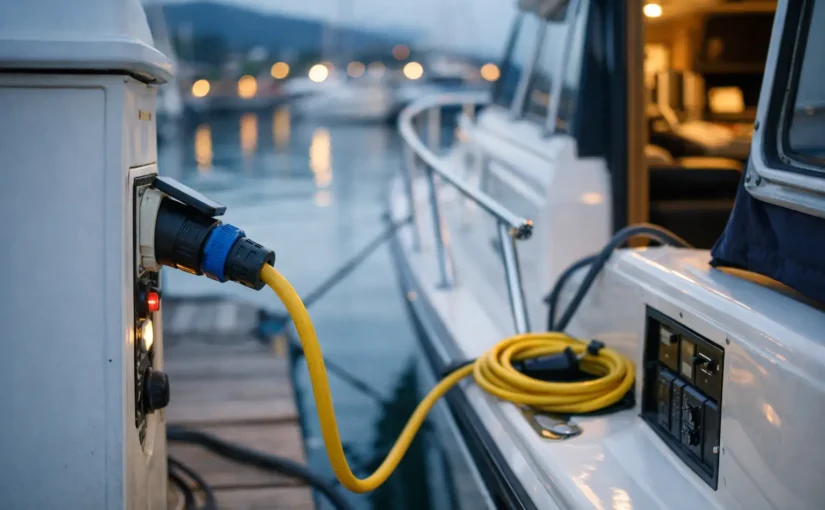
A boat can sit quietly at the dock for hours after shore power fails, right up until the charger stops, the batteries begin to sag, and a small electrical issue turns into a much bigger one. That is why knowing how to detect shore power loss matters. Early detection gives you time to respond before refrigeration warms up, bilge pumps lose charging support, or sensitive onboard systems go dark.
Why shore power loss is a serious risk
Shore power is more than a convenience at the dock. For many boats, it is what keeps battery chargers running, house banks topped off, climate control active, dehumidifiers working, and onboard electronics stable while the vessel is unattended. When that power disappears, the boat may continue operating on battery for a while, which can hide the problem until the damage is already underway.
What happens next depends on your setup. A healthy battery bank may carry light loads for some time. A heavily loaded boat with refrigeration, pumps cycling, and parasitic draws may start dropping voltage much faster. If the outage happens during hot weather, cabin heat and humidity can climb quickly. If it happens during freezing conditions, heaters may stop and plumbing may be exposed. If the charger was supporting bilge pump readiness after repeated cycling, you can see how a dockside power issue becomes a vessel protection issue.
How to detect shore power loss before it becomes costly
The most reliable answer to how to detect shore power loss is simple: monitor the shore power circuit directly and pair that detection with immediate remote alerts. Looking only at battery voltage is not enough. Voltage can stay normal for hours after the pedestal trips, a breaker opens, or someone disconnects the cord. By the time low voltage appears, you are no longer detecting the outage early. You are detecting the consequences.
A proper detection method watches for the presence or absence of incoming AC power. When the system sees that shore power has dropped out, it should alert you immediately through the channels you will actually notice, such as push notifications, text, email, or a phone call. That timing matters. The shorter the gap between failure and alert, the more options you have.
This is also where marine-specific design matters. A generic household smart plug or consumer alarm may tell you if a local outlet lost power, but boats are not houses. Marine environments are wet, corrosive, electrically noisy, and subject to ABYC considerations. If you want dependable oversight, the sensing hardware and installation approach need to match the vessel environment.
The most common ways shore power is lost
Not every outage starts at the same point. Sometimes the marina pedestal trips. Sometimes a dockwide outage takes down multiple slips. In other cases, the issue is onboard – a main breaker trips, an inlet overheats, a cord connection loosens, or an isolation or charger issue interrupts the path.
That is why good detection is not just about knowing that “something changed.” It is about watching the right point in the system. If you only monitor one downstream symptom, you may miss the actual event. If you monitor shore power presence directly, you can catch loss whether it starts at the dock, the cord, the inlet, or the AC distribution side.
Battery trends still have value, but as supporting evidence. If shore power is lost and battery voltage begins falling, you now know both that the outage happened and that the vessel is consuming reserve power. Add bilge activity, high water, temperature, or humidity monitoring and you get a much clearer picture of what that outage is doing to the boat in real time.
Signs you are relying on the wrong detection method
A lot of boat owners assume they will notice a shore power problem from one indirect clue. In practice, that can leave dangerous blind spots.
If you depend on battery voltage alone, you may get the alert too late. If you depend on marina staff spotting a disconnected cord, you are trusting someone else to notice and act. If you check the boat only on weekends, an outage that starts on Monday can quietly drain batteries for days. Even onboard charger indicator lights are only useful if you are physically there to see them.
The goal is not to infer shore power loss after several systems begin failing. The goal is to detect the event as it happens.
What a reliable shore power loss alert system should include
If you are evaluating solutions, focus on speed, specificity, and reliability. A dependable system should sense actual AC power loss, not just estimate it from battery behavior. It should send immediate alerts off the boat, not just sound a local buzzer in an empty marina slip. And it should keep communicating even if one network path is unavailable.
Dual-path connectivity is especially valuable. If the marina Wi-Fi drops during the same storm that knocks out power, a cellular path can still push alerts through. Likewise, if cellular conditions are weak in a covered storage area, Wi-Fi may carry the load. Redundancy is not a luxury in remote monitoring. It is what keeps detection useful when conditions are at their worst.
Alerting method matters too. A push notification is fast, but it can be missed. Text and email provide another layer. For higher urgency events, phone call escalation may be appropriate. The right setup depends on how quickly you need to act and whether the boat is in a region prone to outages, freezing weather, or heavy rain.
How shore power loss fits into total boat monitoring
Shore power loss rarely stays a single-event problem. It tends to trigger a chain of consequences. Chargers stop charging. Batteries begin discharging. Refrigeration may shut down. Climate control stops. Humidity rises. Bilge pumps continue drawing from a battery bank that is no longer being replenished. If the outage persists, the situation can compound fast.
That is why the best protection strategy treats shore power as one part of a broader monitoring stack. When shore power status is combined with battery health, bilge activity, water intrusion, temperature, humidity, and security monitoring, you get context. You are not just told that power was lost. You are told what that loss is doing to the vessel.
For a hands-on owner, that context supports better decisions. If shore power drops but batteries remain strong and no other issues appear, you may have time to coordinate a marina check. If shore power drops and battery voltage is falling while bilge cycles increase, the response window is much shorter. The same alert means different things depending on what else the boat is reporting.
How to detect shore power loss with fewer false alarms
False alarms are one of the fastest ways to stop trusting a monitoring system. On a boat, clean installation and marine-grade hardware make a major difference. Sensors need to be placed correctly, wiring should follow marine best practices, and the system should be designed for vibration, moisture, and corrosion exposure.
It also helps to choose a platform that distinguishes between brief interruptions and sustained outages. Some marinas have momentary interruptions that do not create real risk if power returns immediately. In other situations, even a short outage matters because the vessel relies on continuous climate control or battery support. The right threshold depends on your boat, your location, and the loads you leave running while unattended.
This is where a purpose-built remote monitoring platform earns its keep. EverWatch, for example, is designed around continuous vessel oversight with marine-grade hardware, ABYC-aligned installation practices, and multi-channel alerts so owners can watch, detect, and respond before a power event becomes damage.
Practical setup considerations for boat owners
If you are adding shore power loss detection, think beyond the sensor itself. Decide who receives alerts first, how they receive them, and what the response plan is. If you travel often, a local captain, marina manager, or service contact may need to be looped in after you. If the boat is stored seasonally, you may want different alert behavior in summer and winter.
You should also consider what loads are critical during an outage. On one boat, battery charging may be the main concern. On another, freezers, dehumidification, or freeze protection may be the bigger risk. Those priorities shape how urgent the alerts should be and what additional sensors make sense.
The best monitoring setup is not just technically capable. It matches the way you actually use the boat and the level of risk you are carrying when you are away.
A shore power outage is easy to underestimate because the first few minutes often look uneventful. Boats do not announce the problem loudly at the dock. They just start running on borrowed time. Detect it early, and you stay in control.


 2-Year Warranty
 30-Day Money-Back Guarantee
 U.S.-Based Support