
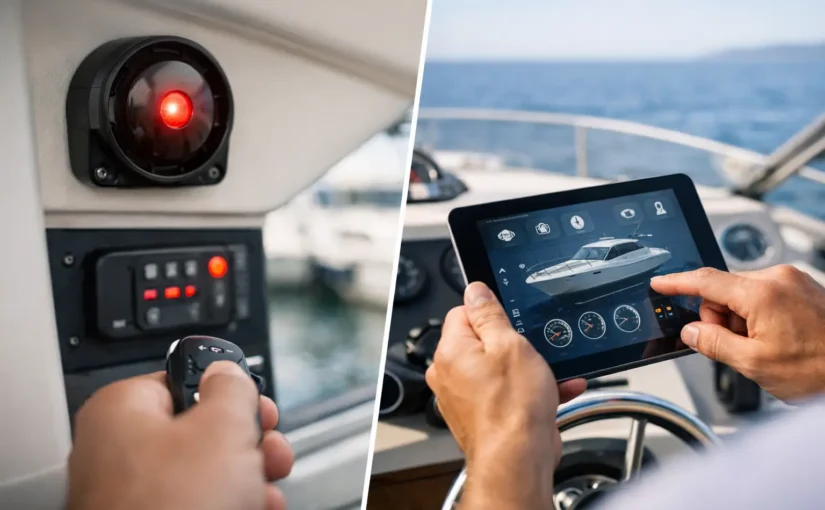
A boat can take on water, lose shore power, or begin dragging anchor long before anyone nearby notices. That is the real difference in the boat alarm vs monitoring decision: an alarm may signal a problem on board, while a monitoring system makes sure the right person can see it and respond from anywhere.
For a vessel sitting at a marina, in dry storage, or on a mooring, detection without notification is often not enough. A siren has value. But it cannot text you when the battery voltage falls, call your captain when high water is detected, or show whether the shore power failure has already affected onboard systems.
A boat alarm reacts locally
A traditional boat alarm is designed to create an audible warning when a specific condition occurs. That could be a door opening, motion in the cabin, a high-water float switch activating, or a battery disconnect event. It is a straightforward layer of protection, especially when someone is within earshot.
For theft deterrence at a busy dock, a horn or siren can be useful. It creates attention, may discourage an intruder, and gives a nearby owner or dock neighbor a reason to investigate. Basic alarms are also familiar, relatively simple, and can be appropriate for a small boat that is used frequently and rarely left unattended.
The limitation is location. An audible alarm is only as effective as the people close enough to hear it and willing to act. At an empty marina after midnight, a siren may run until its battery is depleted. At a storage yard, it may be impossible to distinguish from other equipment noise. And when an alarm triggers because of a failing bilge pump or lost shore power, noise alone does not tell you what happened, when it started, or whether the condition is getting worse.
Boat alarm vs monitoring: detection is not oversight
Remote boat monitoring is built around persistent oversight. It connects onboard sensors to a controller and sends the vessel’s status to your phone, tablet, or computer through cellular or Wi-Fi connectivity. Instead of hoping someone hears an alarm, you receive an alert where you are.
That changes the response window. If shore power fails during a hot weekend, you can see the issue before battery reserves are exhausted and refrigeration, chargers, or climate control are affected. If a high-water sensor activates, you can contact marina staff, a service provider, or a trusted neighbor immediately. If the vessel moves outside a geofence, you can verify its GPS position rather than learning about the problem after the fact.
A monitoring system also gives an event context that a standalone alarm cannot provide. You may see battery voltage trending downward before it reaches a critical threshold, confirm whether bilge activity is normal or unusually frequent, and determine whether a temperature alert coincided with a power outage. That visibility helps boat owners make informed calls instead of reacting to a single flashing light or a vague message from someone at the dock.
| Capability | Local boat alarm | Connected boat monitoring | | — | — | — | | Warns people near the vessel | Yes | Can include local alarms | | Sends alerts to the owner | Usually no | Yes, through app, SMS, email, and calls | | Shows live or historical vessel data | No | Yes | | Monitors multiple systems | Often limited | Expandable across critical systems | | Helps verify response remotely | No | Yes |
Monitoring does not eliminate the need for action. No technology can repair a failed hose, reset a tripped pedestal breaker, or remove water from a sinking boat by itself. What it does is shorten the time between an abnormal condition and a decision. On a boat, that time can be the difference between a minor service call and a major insurance claim.
What a complete monitoring system should watch
The strongest systems do more than add a GPS tracker or a single high-water alert. They create a connected view of the systems most likely to cause expensive trouble while you are away.
Start with electrical health. Shore power status and battery voltage are essential because power loss can create a chain reaction. A tripped breaker can stop chargers, refrigeration, dehumidifiers, climate systems, and other equipment that protects the boat in storage. Monitoring should identify both the loss of incoming power and the effect on battery health.
Water intrusion and bilge activity deserve the same attention. A high-water alarm is critical, but bilge pump cycle activity can provide an earlier warning. A pump that runs more frequently than usual may indicate a leak, a failed check valve, rainwater intrusion, or another developing issue. The best response is not waiting until water reaches the high-water switch.
Security and location matter as well. Door and hatch sensors can alert you to unauthorized access. GPS tracking and geofencing can reveal unexpected vessel movement, whether the boat is at the dock, on a trailer, or at anchor. For owners who leave vessels on a mooring or anchorage, anchor monitoring adds another layer of awareness when wind or current changes overnight.
Environmental monitoring is often overlooked until damage appears. Temperature and humidity data can help prevent mold, mildew, freeze damage, and heat-related equipment stress. That is especially valuable for seasonal owners and operators whose boats sit unattended for weeks at a time.
For more complex vessels, NMEA2000 integration brings engine, transmission, and tank data into the same view. Instead of adding disconnected consumer devices for each concern, owners can monitor key vessel data through one marine-specific platform.
When a basic alarm may be enough
A boat alarm can still be the right choice in narrow situations. If you keep a small boat at home, check it daily, and have neighbors close enough to hear an alarm, a simple local system may meet your immediate needs. It can also serve as a useful secondary deterrent alongside locks, cameras, and physical security practices.
But consider the actual failure scenarios. Are you within hearing range when the boat is unattended? Will someone know which sensor triggered? Can you check battery condition, shore power, or location from out of town? If the answer is no, the apparent savings of a basic alarm may disappear quickly when a small problem goes unnoticed.
A remote monitoring system is generally the stronger fit for boats at marinas, dry stacks, storage facilities, private docks, anchorages, or any location where the owner is not consistently present. It is particularly valuable for larger vessels with shore power, multiple batteries, pumps, climate control, or onboard systems that require regular oversight.
The hidden difference is alert delivery
An alert only works if it reaches someone who can act. Push notifications are fast, but they can be missed. Text messages are useful when app alerts are buried. Email can create a record for non-urgent changes. Phone-call escalation can be appropriate for critical events such as high water, unauthorized movement, or a sustained power failure.
That is why alert delivery should be part of the buying decision, not an afterthought. Look for configurable thresholds, multiple notification channels, and the ability to include family members, captains, marina managers, or service personnel. A system that sends one alert to one phone creates a single point of failure. A system that supports escalation gives the vessel a better chance of getting attention.
Connectivity matters just as much. Marina Wi-Fi can be unreliable, and a Wi-Fi-only device may go silent precisely when you need it most. Dual LTE and Wi-Fi connectivity provides useful redundancy, allowing the system to remain connected when one path is unavailable.
Choose marine-grade protection, not a collection of gadgets
A consumer smart sensor may look inexpensive, but boats are harsh environments. Moisture, vibration, corrosion, unstable shore power, and intermittent connectivity expose weak hardware and improvised wiring quickly. Marine-grade equipment, professionally designed installation paths, and ABYC-aligned wiring practices help protect both the monitoring system and the vessel it is meant to watch.
Expandability is also important. You may begin with shore power, battery, bilge, and GPS monitoring. Later, you may want hatch sensors, humidity data, anchor alerts, or NMEA2000 engine and tank information. A connected architecture lets protection grow with the vessel instead of forcing a replacement every time your needs change.
EverWatch Systems combines onboard sensors, marine-grade controller hardware, dual LTE and Wi-Fi connectivity, and remote alerts in one system built for that job. The goal is not to add more noise to your boat. It is to give you clear information early enough to respond.
Your boat does not need to be in trouble for monitoring to prove its value. Seeing normal shore power, healthy batteries, a dry bilge, and a secure GPS position while you are away is valuable too. It replaces uncertainty with a clear status check, then stands ready when conditions change.