
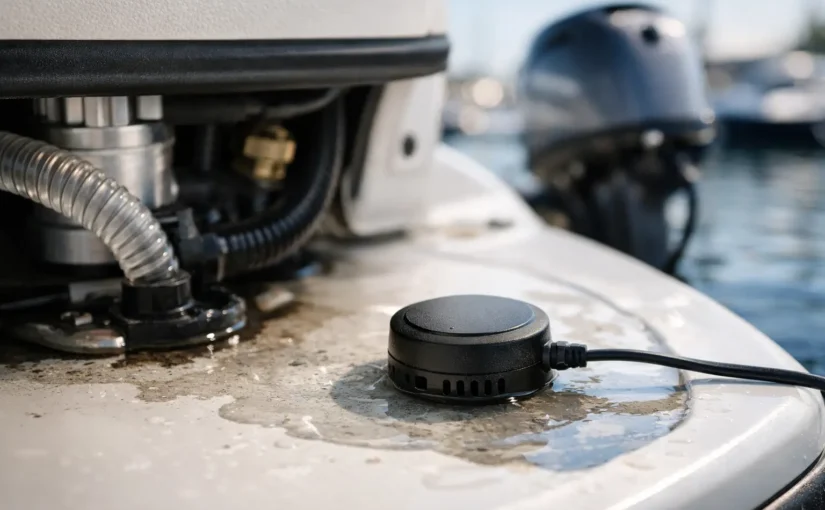
A few gallons of unwanted water in the wrong compartment can turn into soaked wiring, damaged equipment, mold, and a repair bill that lands long before your next day on the water. That is why a boat water intrusion sensor is not a nice-to-have add-on for unattended vessels. It is an early-warning device that helps you detect trouble before it becomes a salvage problem.
For many owners, the risk is not dramatic flooding from a single catastrophic failure. It is the slower, more common chain of events – a leaking hatch, failed seal, backed-up drain, cracked hose, or water entering a bilge area that should stay dry. If your boat sits at a marina, on a mooring, in storage, or at a dock while you are away, early detection matters more than cleanup.
What a boat water intrusion sensor actually does
A boat water intrusion sensor is designed to detect the presence of water where water should not be. That sounds simple, but on a boat, sensor placement and alerting logic make all the difference. Bilge pumps already respond to rising water in a bilge. A water intrusion sensor answers a different question: is water showing up in a space that should remain dry, and how quickly can you be told about it?
That distinction matters because many damaging leaks begin outside the main bilge. Water can enter a cabin sole, lazarette, machinery space, battery compartment, console, or other low point long before a float switch cycles a pump. By the time a standard bilge alarm notices a serious problem, damage may already be underway.
The best systems detect water early, communicate the event immediately, and give you enough visibility to decide whether this is an inconvenience, an urgent service call, or an emergency.
Why early detection beats bilge-only protection
Bilge pumps are essential, but they are reactive. They move water after it has accumulated. A sensor focused on intrusion gives you a chance to respond sooner.
If a hatch gasket fails during a storm, you may get repeated water entry into an interior space that never reaches the bilge right away. If an air-conditioning condensate line clogs, water may pool where electronics or woodwork are exposed. If a washdown fitting leaks, the first sign may be hidden moisture in a compartment, not a high-water event.
This is where a connected monitoring setup has a clear advantage. You are not relying on finding the problem during your next marina visit. You receive notice when the event happens, while there is still time to act.
Where a boat water intrusion sensor should be installed
Placement is more important than most owners expect. A poorly placed sensor can miss the first sign of trouble or send nuisance alerts from normal moisture exposure.
Good locations are low points in dry compartments, under cabin soles, near through-hull service areas, around machinery spaces, beside battery banks if the compartment is intended to stay dry, or in storage areas vulnerable to deck leaks. On center consoles, that may include the console cavity. On cruisers and yachts, it often includes utility spaces and interior compartments that are not part of the primary bilge path.
The right answer depends on the vessel. Boats with complex plumbing, multiple deck openings, or enclosed living spaces usually benefit from more than one sensor. A trailer boat used occasionally has different risk points than a sportfish left in the slip year-round.
One trade-off is sensitivity. You want the sensor low enough to catch the first sign of intrusion, but not in a location that sees routine spray, washdown splash, or condensation unless that moisture is itself a problem worth monitoring.
Not every wet area needs the same response
Some water events are operational. Others are abnormal. A cockpit locker that gets damp during cleaning is different from a forward berth compartment that should stay dry at all times.
That is why smarter monitoring matters. The goal is not just to detect water. It is to detect the right water event in the right place and deliver an alert you will take seriously.
What to look for in a sensor system
The sensor itself is only part of the solution. The real question is whether the full monitoring chain works when you are away from the boat.
Marine-grade construction should be the baseline. Boats are hard on electronics. Salt air, heat, vibration, and humidity expose weak hardware fast. If the sensor or controller is adapted from consumer smart-home gear, reliability becomes a concern.
Alert delivery matters just as much. A local buzzer on the boat is useful if someone is aboard. It does very little if the vessel is unattended. Remote push alerts, text messages, email, and phone escalation create a very different level of protection.
Power integrity also matters. A sensor cannot help if the monitoring platform goes offline during the same event that creates the leak. That is why advanced boaters often look at the entire architecture: controller design, battery protection, communication path, and whether the system keeps reporting when shore power drops.
A strong setup usually includes:
- marine-grade sensor hardware
- ABYC-aligned installation practices
- dependable onboard controller logic
- cellular or Wi-Fi connectivity, ideally both
- fast multi-channel alerts
- expandable inputs for other risk points on the vessel
That last point matters because water intrusion rarely happens in isolation. A shore power fault, dead batteries, failed bilge activity, or rising humidity may tell the rest of the story.
Connected monitoring changes the value of the sensor
A standalone alarm tells you something happened. A connected boat monitoring system tells you something happened and gets that message to you wherever you are.
That difference is what turns a basic sensor into a practical protection tool. If your boat is three hours away, in winter storage, or tied up while you are traveling, local detection without remote notification leaves a major gap.
Connected monitoring also gives context. If a water intrusion alert arrives alongside shore power loss and battery discharge, the event may point to a broader electrical or pump issue. If the boat also shows increased bilge activity, the urgency goes up. If temperatures are low, you may be looking at a freeze-related plumbing failure.
For owners who want real oversight, a boat water intrusion sensor works best as part of a complete remote watch system, not as a single disconnected device.
Common mistakes owners make
The first mistake is assuming the bilge tells the whole story. It does not. Many leaks start and cause damage elsewhere.
The second is choosing a sensor with no reliable remote alert path. If you are serious about protecting the boat while away, the alert has to reach you off-vessel.
The third is installing one sensor and assuming coverage is complete. On a simple boat, one may be enough. On a cruiser, yacht, or multi-system vessel, it often is not.
The fourth is treating installation like an afterthought. Wiring quality, mounting location, and controller integration matter. Marine environments punish shortcuts.
When one sensor is enough, and when it is not
If you have a smaller open boat with a single clear risk area, one sensor may provide useful protection. If you own a larger vessel with enclosed compartments, freshwater systems, air conditioning, deck penetrations, and shore power dependence, one point of detection is rarely enough.
That is where an expandable monitoring platform stands out. You can start with the highest-risk compartment and add coverage as you learn the boat or refine your protection strategy.
Who benefits most from this kind of protection
Owners who leave their boats unattended for days or weeks see the biggest benefit. That includes seasonal users, traveling owners, marina-kept vessels, and anyone managing a boat from a distance.
It also matters for owners of higher-value vessels where interior finishes, electronics, and machinery are expensive to repair. Water damage is rarely limited to the first thing that gets wet. It spreads through wiring runs, insulation, cabinetry, and hidden spaces.
For multi-vessel operators, the value increases again. One unnoticed leak on one vessel can create major downtime. Remote awareness helps standardize oversight across the fleet.
Systems like EverWatch are built around that reality – not just sensing an event, but maintaining constant remote visibility across the conditions that usually lead to expensive marine problems.
The real standard is response time
The best boat protection decisions are not about gadgets. They are about reducing the time between a problem starting and someone taking action.
A boat water intrusion sensor earns its place when it shortens that gap. It gives you a chance to call the marina, dispatch service, notify a captain, or get to the vessel before a minor leak becomes major damage. That is the difference between a manageable service issue and a long off-season of repairs.
If you are evaluating options, think beyond simple detection. Ask whether the sensor is marine-grade, whether alerts reach you anywhere, whether installation follows sound marine practice, and whether the system can grow with the boat. Water does not wait for convenience. Your monitoring should not either.


 2-Year Warranty
 30-Day Money-Back Guarantee
 U.S.-Based Support