


Complete Protection Package
Boat Geofence Alarm: What It Really Protects
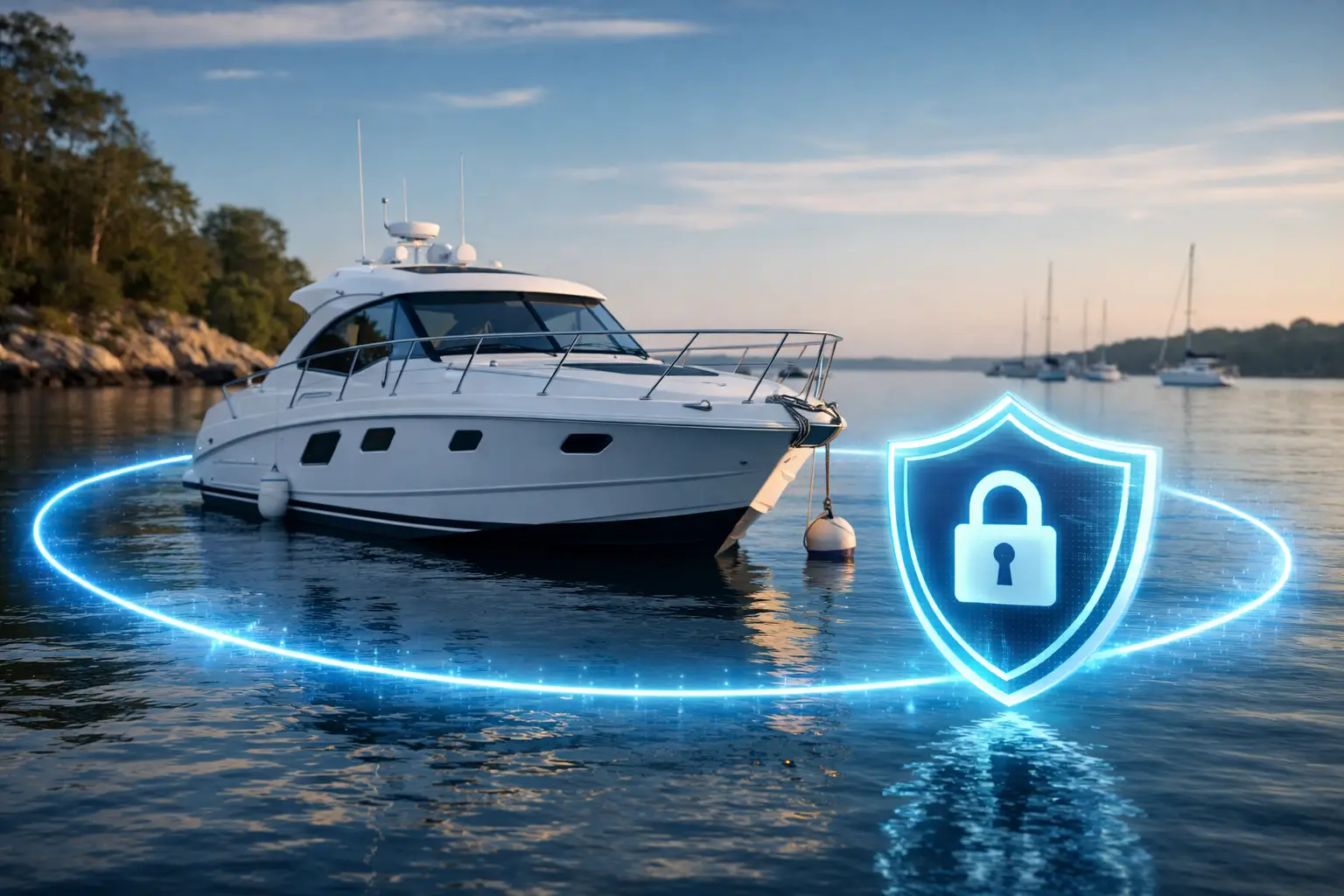
A boat can leave exactly where you expect it to be for reasons that range from annoying to catastrophic. Maybe the marina shifts slips without notice. Maybe a storm parts lines. Maybe someone steps aboard, starts moving gear, and your vessel is already halfway into a problem before anyone nearby notices. A boat geofence alarm exists for that moment – when location changes matter, and waiting to find out later is too late.
For many owners, geofencing sounds simple: draw a virtual boundary, get an alert if the boat crosses it. That is the basic function, but the real value is faster awareness. Position alone does not protect a vessel. Timely detection does. When the boat moves outside the zone you defined, the system can notify you immediately so you can verify whether it is authorized, accidental, or dangerous.
What a boat geofence alarm actually does
A boat geofence alarm uses GPS position data to watch a vessel against a preset perimeter. If the boat exits that area, you receive a notification. Depending on the monitoring platform, that alert may arrive as a push notification, text, email, or phone call.
That sounds straightforward, and it is. But on the water, movement is rarely black and white. Boats shift in slips. They swing on anchor. They drift slightly with current and wind. A useful geofence system accounts for real marine conditions instead of treating every minor position change as an emergency.
This is where many basic trackers fall short. They can tell you where the boat was. They are less dependable at telling you when movement actually requires action. A true monitoring system is built to separate normal vessel motion from movement that deserves your attention.
Why geofence alerts matter more than simple tracking
A map pin after the fact is helpful for recovery. It is not the same as prevention. The difference between a tracker and a boat geofence alarm is timing.
If your boat is being towed from a yard, drifting off anchor at 2:00 a.m., or moving out of its assigned marina area without authorization, every minute matters. Early notice gives you options. You can call the marina, contact a captain, alert harbor patrol, check weather conditions, or verify whether the movement was expected. That kind of response window can prevent a theft from turning into a total loss, or a minor incident from becoming hull damage, grounding, or collision.
For owners who travel often or keep vessels in seasonal storage, the value is even clearer. You are not standing at the dock every day. A remote alert system becomes your eyes on the boat when you are not there.
Where a boat geofence alarm helps most
The obvious use is theft deterrence, but that is only one scenario. A geofence alert is just as valuable for unplanned movement that has nothing to do with crime.
At the dock, it can warn you if the vessel is moved from its assigned berth or leaves the marina area unexpectedly. In dry storage or service yards, it can confirm whether a move was scheduled or if the boat was repositioned without your knowledge. At anchor, location alerts can work alongside anchor monitoring to help you react quickly if the boat drags outside its safe swing area.
Multi-vessel owners and managers get another advantage: operational oversight. If you are responsible for several boats, you need to know which movement is routine and which movement is a problem. Geofencing helps establish that line clearly.
There is also a practical insurance mindset here. The best outcome is not proving where the boat went. The best outcome is catching movement early enough that loss, damage, and downtime stay limited.
Geofence alarms are only as good as the system behind them
Not every geofence feature performs the same way. This matters more on boats than it does on cars, trailers, or consumer gadgets because marine conditions are harder on hardware and less forgiving of missed alerts.
A dependable system needs stable GPS performance, reliable onboard power management, and a communication path that keeps delivering notifications when conditions change. If the device loses power, drops connectivity, or sends alerts through only one channel, the feature becomes less useful the moment you need it most.
That is why serious boat owners tend to look beyond a single geofence checkbox. They want a monitoring stack that supports it – marine-grade hardware, clean installation practices, dependable connectivity, and alert options that do not rely on one fragile path.
Dual cellular and Wi-Fi connectivity can make a real difference here. So can multi-channel alerting. If a push notification gets missed, a text or phone call may still get through. Redundancy is not extra on the water. It is part of dependable protection.
How to set a boat geofence alarm the right way
The most common setup mistake is making the boundary too tight. On land, a small perimeter may work fine. On a boat, normal movement can trigger constant nuisance alerts if the fence does not allow for slip position changes, tide, current, and GPS drift.
At a marina, the right geofence usually covers the slip area with reasonable tolerance around it. You want to know if the boat leaves the berth or marina zone, not every time wind nudges it a few feet. At anchor, the boundary should reflect the vessel’s expected swing radius plus a safety buffer. In storage, you may want a tighter perimeter because movement should be rare and deliberate.
It also helps to think in terms of use case. Are you trying to detect theft, monitor yard handling, watch an unattended anchorage, or confirm that a service move happened as expected? The answer changes how large the zone should be and how fast you want alerts delivered.
A good app experience matters here. If adjusting geofence settings is clumsy, owners tend to leave default zones in place, even when those settings do not match real conditions. The best systems make it easy to define, review, and change boundaries as the boat’s location changes through the season.
A geofence alarm works best with other boat alerts
Movement rarely happens in isolation. If your boat crosses a geofence and you also see shore power loss, a falling battery reading, or a hatch alert, the picture changes fast. Now you are not just looking at movement. You may be looking at unauthorized boarding, tampering, or a broader vessel security issue.
That is why geofencing is strongest when it is part of a connected monitoring platform rather than a stand-alone tracker. High water, battery health, door and hatch status, temperature, humidity, and NMEA2000 data all add context. They help you decide whether the alert is routine, urgent, or escalating.
For example, a boat leaving a storage yard during business hours may be expected. The same movement at night, paired with a low-voltage condition or hatch opening, deserves a very different response. Context reduces guesswork.
EverWatch approaches geofencing this way – as one protective layer in a full-time vessel monitoring system designed for rapid awareness, marine reliability, and immediate action when conditions change.
What to look for before you trust one on your boat
A boat geofence alarm should be judged by more than whether it can draw a circle on a map. Ask how the hardware is built, how it is powered, how alerts are delivered, and what happens if one communication path fails. Ask whether the installation aligns with marine electrical best practices. Ask whether the system is designed for boats that sit unattended for long stretches, not just vehicles that are used every day.
You should also think about the ownership experience. Will the app show you clear status data when an alert fires? Can you verify the vessel’s position quickly? Can you customize alert behavior for different situations? Does the system grow with your boat if you later want bilge, battery, hatch, tank, or engine visibility?
Those details decide whether geofencing becomes a daily protection tool or just a feature you hope works.
A boat does not need to disappear to create a costly problem. Sometimes it only has to move a little, at the wrong time, without anyone knowing. A well-built geofence alarm gives you that knowledge early, which is often the difference between a quick phone call and a long repair bill.
 2-Year Warranty
 30-Day Money-Back Guarantee
 U.S.-Based Support