
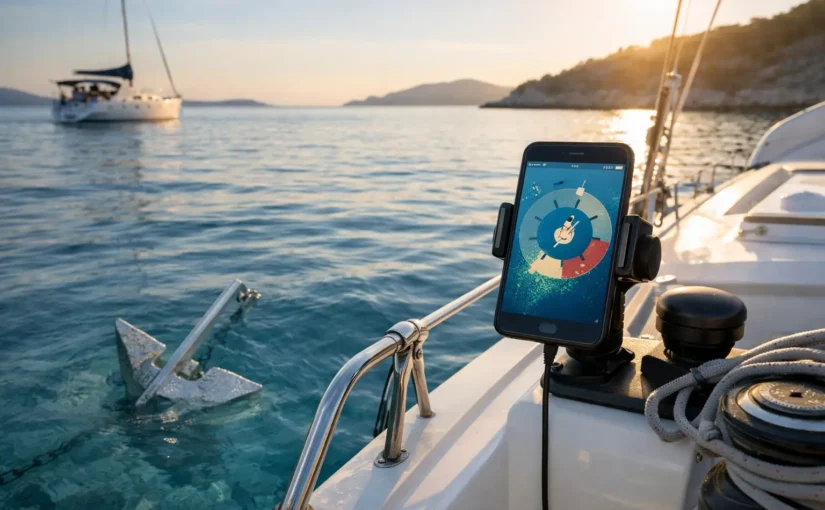
At 2:14 a.m., an anchor drag alarm is either the most useful sound on your boat or the one you stop trusting after too many false alerts. That is the real test when choosing the best boat anchor alarm. If it wakes you up for every swing in a light breeze, you will ignore it. If it stays quiet when the boat is moving out of position, you have a much bigger problem.
For most boat owners, the question is not just which app or device can draw a circle around a GPS point. The better question is which system can monitor anchor position in a way that matches real-world anchoring, sends alerts you will actually see, and still works when you are off the boat, asleep, or out of cell range for part of the night. That is where the differences start to matter.
What the best boat anchor alarm actually needs to do
A basic anchor alarm only tracks position drift from a set point. That sounds simple, but anchoring is not static. Boats swing with wind and current. GPS position wanders. Some anchorages are tight and crowded, while others give you room to ride out a shift. A useful alarm has to account for normal movement without missing abnormal movement.
That means accuracy matters, but so does logic. The best systems let you set a sensible radius, understand the difference between swing and drag, and alert you fast when your vessel leaves the safe zone. The alarm also needs to be easy to arm and verify. If setup feels complicated when you are tired, wet, or anchoring at dusk, mistakes creep in.
A good anchor alarm should also fit the way you use your boat. If you stay aboard overnight, an onboard alarm may be enough. If you leave the boat unattended at anchor, you need remote visibility. Those are two different use cases, and many products only solve one of them.
Onboard anchor alarms vs remote monitoring
This is the biggest split in the market. Many anchor alarms are phone apps or chartplotter features designed for people sleeping on the boat. They can work well in that role. You drop anchor, set your radius, keep your phone charged, and let the device sound an alarm if the boat moves too far.
The trade-off is obvious. If the phone battery dies, the app is closed, the tablet loses GPS, or you step away from the vessel, protection drops with it. That may be acceptable for a weekend cruiser in calm weather. It is not enough for an owner who leaves a boat on the hook while ashore, manages multiple vessels, or wants protection that continues without depending on one consumer device.
Remote monitoring systems take a different approach. Instead of acting like a bedside alarm clock, they monitor the boat as an asset. Anchor position becomes one layer of protection alongside GPS tracking, geo-fencing, battery monitoring, bilge alerts, shore power status, and intrusion detection. That matters because anchor problems rarely stay isolated. A dragging boat can lead to collision, grounding, battery strain, or a dead house bank by morning if systems are running hard.
How to compare the best boat anchor alarm options
The first thing to check is how alerts are delivered. A local siren or phone sound is useful only if you are close enough to hear it. Remote alerts by push notification, text, email, or phone call give you more ways to respond. Redundancy matters here. If a single alert channel fails, you still want another path.
The second factor is connectivity. Bluetooth-only products are limited by distance. Wi-Fi can work at a dock if the signal is stable, but many anchorages are outside reliable marina coverage. Cellular-backed systems are stronger for remote awareness, especially when paired with onboard intelligence that keeps monitoring even if your personal phone is off.
Power draw is another real-world issue. Some app-based alarms rely on a phone or tablet staying active all night. Some dedicated marine systems are designed for continuous use with low draw and hardwired power. If you anchor often, that difference adds up.
Then there is installation. Portable apps win on simplicity. They require almost no hardware. Dedicated marine monitoring systems take more effort up front, but they typically deliver more consistent results and broader protection. If your boat is a high-value asset, permanent installation is usually the better fit.
Best boat anchor alarm features that matter most
Reliable GPS and sensible radius controls
A precise position fix is only half the job. You also need enough control to set an alarm radius that reflects your rode, depth, and expected swing. Too tight, and you get nuisance alerts. Too wide, and you may not get enough warning.
Multi-channel alerts
Push alerts are convenient, but they should not be the only option. SMS, email, and phone call escalation create a stronger chain of notification, especially overnight or when cellular app delivery is delayed.
Remote access when you are off the boat
This is where many boat owners outgrow simple anchor apps. If you leave the vessel for dinner, head ashore in the dinghy, or manage a boat from another city, local-only alarms stop being enough.
Integration with broader vessel monitoring
Anchor drag is a position problem, but the consequences touch other systems. If your batteries are low, bilge activity rises, or a door opens after unexpected movement, those signals help you assess urgency faster.
Marine-grade hardware
Salt, vibration, moisture, and unstable power destroy consumer electronics over time. A system built for marine wiring, proper installation, and constant service stands up better offshore and at anchor.
The trade-off between simple apps and dedicated systems
There is nothing wrong with a phone-based anchor alarm if your needs are narrow. For an owner sleeping lightly in the V-berth with the phone plugged in beside them, it can be a cheap and useful tool. If the weather is settled and the anchorage has room, that may be enough.
The weak point is persistence. Consumer apps are not vessel protection systems. They are session-based tools. They depend on one device, one battery, one user remembering to keep everything active, and one person being close enough to respond immediately.
A dedicated anchor monitoring system costs more, but it changes the level of protection. It keeps watch when no one is aboard. It can notify multiple people. It can support a fleet, a yacht manager, or a seasonal owner who is states away. It treats anchor status as part of a continuous operating picture instead of a one-night convenience feature.
Who needs more than a basic anchor alarm
If you only anchor a few weekends each summer and stay aboard every time, a basic alarm may serve you well. Keep expectations realistic and test it before trusting it overnight.
If you own a larger vessel, leave the boat unattended, spend time in exposed anchorages, or already care about shore power, batteries, bilge, and security, you are in different territory. You need a system that keeps watch beyond a single screen. That is where a platform like EverWatch makes more sense, because anchor alerts are backed by remote connectivity, mobile visibility, and broader onboard monitoring instead of standing alone.
What to look for before you buy
Start with your actual risk. Ask whether you need an alarm for sleeping aboard, for remote vessel oversight, or for both. Then look at how alerts are sent, whether the system keeps working without your phone in hand, how it is powered, and whether it belongs in a marine environment long term.
Also think about response. An alarm has value only if it reaches the right person fast enough to act. If you want your captain, family member, marina contact, or service provider to know immediately, choose a system that supports that chain clearly.
The best boat anchor alarm is not the one with the most settings or the loudest siren. It is the one that fits how you anchor, how often you leave the boat unattended, and how much risk you are willing to carry while you sleep. When the wind shifts at 2:14 a.m., confidence comes from knowing something dependable is still watching.