
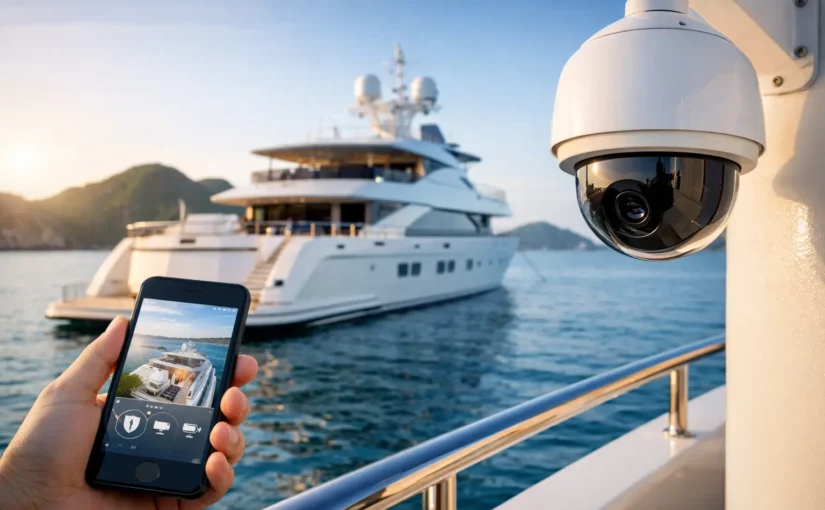
A yacht can be secure at the dock and still be vulnerable. Shore power can fail overnight. A bilge pump can run too long. A hatch can open while the boat is unattended. Someone can move the vessel before a marina manager notices. The best yacht security systems do more than sound an alarm after a problem starts. They give you immediate visibility into the conditions that can lead to theft, damage, downtime, and costly repairs.
For most owners, the right system is not a single camera, tracker, or door sensor. It is a connected monitoring platform built for the realities of marine power, water, weather, and limited cellular coverage. It should watch the boat continuously, deliver alerts through channels you will actually see, and give you enough information to decide what happens next.
What the Best Yacht Security Systems Actually Protect
Traditional security focuses on intrusion: a door opens, an alarm sounds, and someone responds. That matters, but yacht protection requires a wider view. A vessel can sustain serious damage without anyone stepping aboard.
A high-water condition may indicate a failed pump, leaking fitting, failed hose, or rainwater accumulating where it should not. A shore power loss can leave batteries unsupported, air conditioning offline, and refrigeration at risk. A battery bank that drops unexpectedly can point to a charging issue, an electrical load, or a developing fault. Temperature and humidity changes can create mildew, freeze risk, or equipment problems long before the boat looks visibly compromised.
That is why the strongest systems combine security, safety, and vessel health monitoring. They protect against unauthorized access and movement while also watching the systems that keep a yacht afloat, powered, and ready to use.
The Features That Separate a Yacht System From a Generic Alarm
A consumer smart-home device may work on a boat for a limited task, but it is rarely designed to be the central protection system for a high-value vessel. Marine environments are hard on electronics. Connectivity changes. Power is not always stable. An alert only matters if it arrives when the boat is unattended and someone can act.
GPS Tracking, Geofencing, and Anchor Alerts
GPS position monitoring is the foundation of theft and movement protection. A geofence creates a virtual boundary around the marina slip, mooring, storage yard, or approved operating area. If the yacht moves outside that boundary, the system should send an immediate alert.
For vessels left at anchor, anchor-drag monitoring adds another layer of protection. Wind shifts, changing tide, and poor holding can move a boat far faster than an owner expects. The practical value is not just knowing where the yacht is. It is knowing when its location changes enough to require attention.
GPS alone is not complete security. It tells you that movement occurred, but it does not explain whether a hatch was opened, shore power was disconnected, or water is rising. Use it as part of a connected system, not as the whole solution.
Door, Hatch, and Intrusion Detection
Contact sensors on doors, hatches, lockers, and access points provide a direct record of unauthorized entry. They are especially useful for yachts kept in remote storage, on seasonal docks, or at marinas where owners may be traveling for weeks at a time.
Placement matters. A single sensor on the companionway may be enough for a small express cruiser, while a larger yacht may need coverage for salon doors, crew access, engine-room entrances, transom lockers, and hardtop hatches. The goal is not to install a sensor on every opening. It is to cover the openings that provide meaningful access or expose valuable equipment.
High-Water and Bilge Activity Alerts
Water intrusion is one of the most expensive problems a remote monitoring system can help catch early. A high-water sensor provides a direct warning when water reaches a defined level. Bilge pump activity monitoring gives earlier context: if a pump begins cycling more often or runs continuously, something may be wrong before the water reaches the alarm level.
Both functions should be used together. A high-water alert is urgent. Unusual bilge activity is an early warning that gives you time to call the marina, contact a service technician, or investigate before the situation escalates.
Shore Power, Battery, and Environmental Monitoring
A yacht that loses shore power may appear fine for hours, then begin suffering secondary failures. Batteries can discharge. Chargers stop. Refrigeration and climate control can go offline. Onboard equipment may not restart properly when power returns.
Look for a system that monitors shore power status and battery voltage rather than simply reporting whether the boat is online. Voltage trends help identify battery health issues, charging problems, and unexpected electrical draws. Temperature and humidity sensors add useful protection for cabins, engine spaces, freezers, and areas vulnerable to moisture damage.
Reliable Connectivity and Escalating Alerts
An alert platform is only as dependable as its connection to the boat and its ability to reach you. Wi-Fi can be useful at a home dock or well-equipped marina, but it should not be the only path. Marina networks fail, passwords change, and a vessel may move to an anchorage or storage location without dependable local Wi-Fi.
Dual LTE and Wi-Fi connectivity gives the system options. If one connection is unavailable, the other can continue reporting. The best platforms also offer more than mobile push notifications. Push alerts are fast, but a phone may be on silent. SMS, email, and phone-call escalation provide additional paths for urgent events such as high water, unauthorized movement, or power loss.
How to Choose the Right Level of Yacht Security
The right configuration depends on how and where you leave your yacht. A day boat kept on a trailer has different risks than a 60-foot yacht on shore power at a marina. A vessel on a mooring has different priorities than one stored indoors for winter.
Start with the incidents that would create the greatest financial or operational impact. For many owners, those are water intrusion, shore power loss, battery failure, theft, and unauthorized movement. Then consider the time between visits. If you check the boat every few days, basic alerts may be sufficient. If you travel frequently, own more than one vessel, or leave the yacht unattended for extended periods, deeper monitoring and alert escalation become more valuable.
These five capabilities should be on the shortlist:
- Marine-grade controller hardware designed for onboard installation and variable power conditions.
- Expandable sensors for water, doors, hatches, temperature, humidity, and other vessel-specific risks.
- GPS tracking with geofencing and anchor monitoring.
- Dual-path connectivity through cellular and Wi-Fi.
- Multi-channel alerts that can reach owners, captains, managers, or service contacts quickly.
Technical owners should also consider NMEA 2000 integration. This connection can bring engine, transmission, tank, and other networked vessel data into the same remote view as security and environmental alerts. It does not replace preventive maintenance, but it gives you a clearer picture of what was happening onboard when an alert occurred.
Installation Quality Is Part of Security
A system with excellent features can still underperform if it is poorly installed. Loose wiring, incorrect fusing, unprotected connections, and poorly located sensors can create false alerts or leave critical conditions undetected.
Choose marine-grade hardware and installation practices aligned with ABYC wiring and safety standards. Sensors should be positioned where they detect a real change early, not after damage has already spread. For example, a high-water sensor belongs where water accumulation will be meaningful, while a temperature sensor should reflect the area you are trying to protect rather than a spot affected by direct sunlight or an equipment exhaust path.
Ask how the system handles power interruptions and reconnects after a cellular or Wi-Fi outage. Also ask who receives alerts and whether those contacts can be customized by event. A high-water condition may need to notify the owner, captain, and marina contact immediately. A humidity change may only require a push notification to the owner.
One Connected View Beats a Collection of Apps
It is possible to assemble separate GPS trackers, cameras, battery monitors, smart plugs, and standalone alarms. The trade-off is management. Each device has its own app, connection, battery or power requirements, alert rules, and failure points. When something goes wrong, you may spend critical minutes figuring out which system is reporting accurately.
A connected marine monitoring platform puts location, power, water, access, environmental conditions, and vessel data in one place. EverWatch Systems is built around that model, combining marine-grade onboard hardware, expandable sensors, dual LTE and Wi-Fi connectivity, and mobile access with alerts by push notification, SMS, email, and phone call. That approach gives owners a practical path from detection to response without relying on disconnected consumer devices.
The best yacht security system is the one that identifies the risks your yacht actually faces, remains connected when you are away, and sends an alert early enough to make a difference. Your boat does not need another gadget. It needs a watchful system that tells you when it is time to act.