
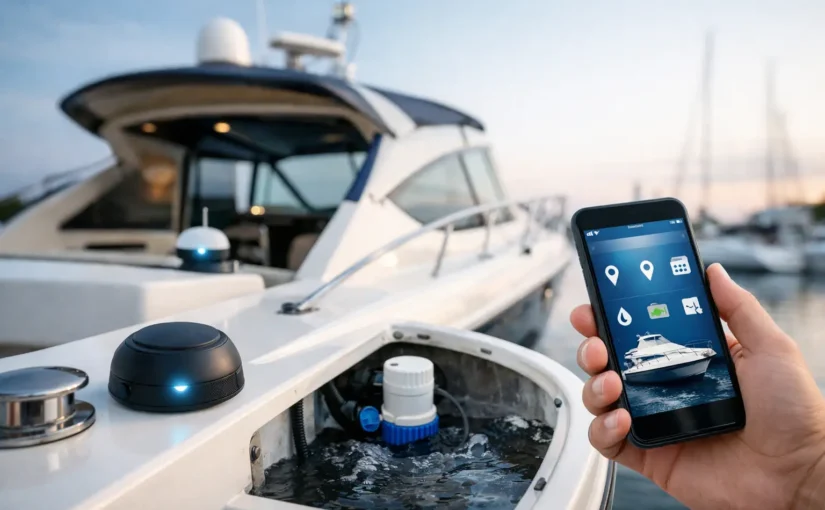
A shore power breaker can trip at 2:00 a.m. A bilge pump can begin cycling more often than normal. A hatch can be left open before a storm rolls through. These are not problems that wait for your next visit to the marina. The best remote boat sensors give you visibility when no one is onboard, turning hidden vessel risks into alerts you can act on.
For most boat owners, the right answer is not one standalone gadget. It is a connected monitoring system built around the systems most likely to cause costly damage, downtime, or security concerns. The goal is simple: detect the condition, alert the right person quickly, and give them enough information to respond.
What Makes the Best Remote Boat Sensors Different?
A remote sensor is only as useful as its ability to communicate a meaningful problem. A basic Bluetooth battery monitor may show voltage when you are standing in the cabin, but it cannot protect a boat sitting unattended across town. A consumer leak detector may chirp, but it may not withstand heat, moisture, vibration, and unreliable marina Wi-Fi.
The best remote boat sensors are part of a marine-grade system with dependable connectivity, clear alert settings, and enough expansion capability to cover the way you use your boat. That usually means cellular backup or primary cellular service, Wi-Fi when available, a dedicated onboard controller, and app-based access to live data and alert history.
It also means distinguishing between an event and a trend. A single low-voltage reading might not require a call at midnight. Repeated bilge activity, a dropping battery voltage after shore power loss, or a rising cabin humidity level can signal a developing issue. Good monitoring helps you see both.
Marine-grade installation matters
Boats are harsh environments for electronics. Salt air, condensation, vibration, voltage fluctuations, and long periods without supervision expose weak points quickly. Choose hardware designed for marine use and installed with proper wiring practices. ABYC-aligned installation is more than a technical detail. It helps ensure that the monitoring equipment protects the vessel without creating new electrical concerns.
For owners with modern onboard networks, NMEA2000 integration is another dividing line. It can bring engine, transmission, tank, and other supported vessel data into the same remote view as your security and environmental sensors. That creates a more useful picture than a collection of disconnected apps.
The Sensors That Protect the Most Important Risks
Every vessel has different priorities, but several remote sensor categories deserve attention on nearly every boat.
Shore power and AC power sensors
Shore power loss is one of the most valuable alerts a boat owner can receive. When dock power fails, battery chargers stop, refrigeration may go down, climate control can stop, and batteries begin carrying loads they were never meant to support for long.
A useful shore power sensor should tell you when AC power is lost and when it returns. The best setups pair that alert with battery monitoring, because the real question after a power outage is whether the DC system is holding up. A brief marina outage is one thing. A power failure that leaves a boat with declining batteries for two days is another.
Battery voltage and charging sensors
Battery problems are often quiet until they become urgent. Low voltage can prevent an engine start, disable a security system, damage battery life, or leave essential loads unsupported. Monitoring starting batteries, house banks, and charging status remotely gives you a chance to address a problem before arriving to a dead boat.
Look beyond a simple low-voltage alert. Configurable thresholds, historical readings, and the ability to compare battery behavior with shore power status are far more valuable. If voltage is falling while shore power is present, the issue may be a charger, wiring fault, or battery failure. If voltage falls after shore power disappears, you know where to start.
High-water, bilge, and water-intrusion sensors
Water intrusion is the alert nobody wants to receive late at night, which is exactly why it should be monitored. A high-water sensor detects rising water above the normal bilge level. Bilge pump monitoring can also reveal excessive pump cycles, a useful early warning of a leak, failed check valve, stuck float switch, or heavy rainwater intrusion.
These functions work best together. A pump running once after rain is not automatically an emergency. A pump cycling repeatedly, followed by a high-water condition, demands immediate attention. The right system lets you set sensible alert rules instead of treating every normal pump cycle as a crisis.
GPS, geofence, and anchor sensors
A boat can move when it should not. Theft, unauthorized use, broken dock lines, drifting at anchor, and towing activity all create different risks, but GPS position monitoring helps establish control from anywhere.
Geofencing alerts you when a vessel leaves a defined area. Anchor monitoring uses position data to warn you if the boat drifts beyond an acceptable radius. These tools are especially valuable for owners who anchor overnight, keep boats in remote slips, or manage multiple vessels. GPS is not a substitute for proper ground tackle or dock lines, but it gives you early awareness when conditions change.
Temperature, humidity, door, and hatch sensors
Cabin conditions can become expensive problems long before they look dramatic. High humidity supports mildew and corrosion. Extreme temperature can affect electronics, interior finishes, stored supplies, and freeze-sensitive systems. A temperature and humidity sensor gives seasonal owners a direct view of what is happening below deck.
Door and hatch sensors cover another part of the risk picture. They can warn you about unauthorized entry, an unsecured compartment, or a hatch left open before weather arrives. On a larger vessel, these sensors can also help confirm whether crew or service personnel accessed a specified area.
How to Choose a Remote Boat Monitoring System
Start with the failure modes that matter most for your vessel. A center console stored on a trailer may prioritize GPS, battery voltage, and intrusion alerts. A cabin cruiser in a wet slip may place high water, bilge cycles, shore power, temperature, and humidity at the top of the list. A yacht with complex systems may need NMEA2000 data alongside a broad sensor package.
Then evaluate the monitoring platform, not just each sensor. Ask whether it can deliver push notifications, SMS, email, and phone-call alerts. Different events deserve different urgency. A door opening may be a push notification. High water or shore power loss followed by declining batteries may justify a phone call.
Connectivity is equally important. Marina Wi-Fi can be inconsistent, and a system that depends entirely on it may go silent when you need it most. Dual LTE and Wi-Fi capability offers practical redundancy. Wi-Fi can support normal use where available, while cellular connectivity keeps the boat visible if the local network fails.
Finally, choose a platform that can grow. You may start with shore power, batteries, and bilge monitoring, then add a hatch sensor, a second temperature zone, or engine data later. Expandable architecture protects your investment and avoids the frustration of replacing an entire system when your monitoring needs change.
Avoid the Patchwork Approach
It is tempting to combine a GPS tracker, a Wi-Fi camera, a battery app, and a few consumer sensors. That approach can work for limited needs, but it often creates alert fatigue and blind spots. Each device may have separate power requirements, separate subscriptions, separate apps, and different levels of marine durability.
A unified vessel monitoring system puts critical information in one place. It can correlate events, preserve a useful history, and route alerts through the channels you choose. EverWatch Systems is designed around that connected approach, combining marine-grade hardware, expandable sensors, dual LTE and Wi-Fi connectivity, and mobile access for continuous vessel oversight.
The best setup is not necessarily the one with the longest sensor list. It is the one that watches the conditions most likely to threaten your boat, reaches you reliably, and helps you respond before a small alert becomes a repair bill. When you leave the dock, your monitoring plan should stay on watch.