
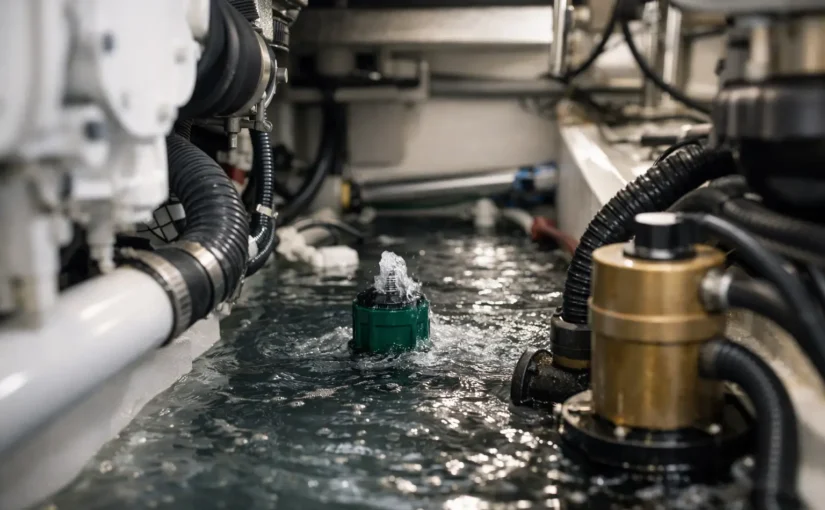
A bilge flood rarely starts as a dramatic event. More often, it begins with a pump cycling a little longer than usual, a battery draining faster than expected, or a small leak that goes unnoticed while the boat sits unattended. That is exactly why knowing how to detect bilge flooding matters. Early detection is what separates a manageable repair from major water damage, electrical loss, or a sinking at the dock.
Why bilge flooding gets missed
Most boat owners assume the bilge pump is the safety net. It is part of the safety net, but it is not the whole system. Pumps remove water. They do not explain why water is entering, whether the inflow is increasing, or whether the pump can keep up.
That gap is where flooding incidents grow. A failed hose clamp, leaking shaft seal, cracked livewell line, bad through-hull connection, failed air conditioning hose, or heavy rain intrusion can all put water in the bilge. If nobody is aboard, small warning signs are easy to miss. By the time a neighbor notices the boat sitting low, the problem may already be expensive.
The real goal is not just pumping water out. The goal is detection, verification, and fast response.
How to detect bilge flooding before it becomes critical
The most reliable answer to how to detect bilge flooding is to monitor both water level and pump behavior. One without the other leaves blind spots.
A high-water sensor gives you direct confirmation that water has reached a point it should not reach. That is the clearest sign that the bilge is taking on more water than normal or that the primary pump is not clearing it fast enough. For many boat owners, this is the first layer that should never be skipped.
Bilge pump activity adds the second layer. If the pump starts cycling more often, runs for longer periods, or operates continuously, something has changed even if the water has not yet hit a separate high-water threshold. Frequent cycling can be the earliest warning of a slow leak, failed float switch, stuck check valve, or increasing ingress from weather or plumbing.
When those two signals are monitored together, you move from guesswork to real oversight. You are not waiting until the boat is visibly in danger. You are catching the pattern that leads there.
The warning signs boat owners should watch
Some flooding clues are obvious when you are on board. Water sloshing where it should not be, damp storage compartments, unusual mildew, and pump noise are all red flags. But most vessels are damaged when nobody is present, which changes the detection strategy.
If your bilge pump is running more than normal after calm weather, take it seriously. If batteries are dropping unexpectedly, it may be because the pump is working overtime. If shore power fails and the pump must rely on house batteries alone, flooding risk rises fast. In that case, bilge detection is no longer just about water. It is also about power continuity.
That is why good monitoring looks at connected systems, not isolated alarms. Water intrusion, pump run status, battery voltage, and shore power condition all tell the same story from different angles.
Sensor options for bilge flood detection
There is no single setup that fits every boat, but there are clear best practices.
A basic audible bilge alarm is better than nothing. It can alert someone nearby when water reaches a set point. The limitation is obvious. If nobody is at the marina, in the storage yard, or on the boat, the alarm does not help much.
A dedicated high-water sensor gives more dependable detection than relying only on a pump float switch. Float switches are designed to trigger pump operation, not always to provide clear warning logic. They can stick, foul, or fail. A separate sensor mounted above the normal pump activation point creates a distinct escalation alert.
Pump-cycle monitoring is another strong layer. It does not measure water directly, but it reveals abnormal behavior early. If you know what normal looks like on your vessel, any increase stands out. This is especially useful on boats where minor seepage is expected, because the issue is often the change in pattern, not the presence of some water.
Remote-connected monitoring is the most complete option for unattended vessels. Instead of depending on someone hearing an alarm dockside, the system sends push notifications, text messages, emails, or phone alerts as soon as a high-water or abnormal pump event occurs. That response window matters. Minutes and hours make a real difference when water is rising.
Where sensors should be installed
Placement matters as much as the sensor itself. A high-water sensor should be mounted above the normal bilge pump float switch level but below the point where rising water threatens batteries, wiring, engines, or cabin soles. Too low, and you may get nuisance alerts from normal bilge accumulation. Too high, and the warning comes too late.
Boats with multiple bilge compartments need extra attention. Water does not always travel where you expect. A leak forward may not trigger an aft sensor right away. Larger boats, stepped hull designs, and compartmentalized bilges often need more than one detection point.
The pump monitor should be wired in a way that accurately reflects pump operation, whether the pump is triggered automatically or manually. Clean installation matters here. Marine-grade components, proper overcurrent protection, and ABYC-aligned wiring practices are not extras. They are part of making sure the alarm system works when the boat is wet, vibrating, and unattended.
How remote monitoring changes the response window
If you only inspect the boat on weekends, you do not have a monitoring system. You have a delay.
Remote oversight changes that. A connected system can notify you the moment high water is detected, the instant bilge pump activity spikes, or when shore power is lost and battery-powered pumping becomes the only line of defense. That allows you to call the marina, dispatch service, contact a captain, or get to the boat before the situation compounds.
This is where an integrated platform has a practical advantage over stand-alone alarms. Flooding events often involve more than one failure. A leaking fitting may trigger extra pump cycles. The extra pump load may pull down batteries. A shore power outage may remove charging support. Monitoring those conditions together gives a more accurate picture of risk.
For owners who leave vessels unattended for long stretches, that connected visibility is not convenience. It is protection. EverWatch is built around that model, combining marine-grade sensors, controller hardware, app access, and real-time alerts so boat owners can watch, detect, and respond even when they are miles away.
Common mistakes when trying to detect bilge flooding
The biggest mistake is assuming the factory pump setup is enough. It often is not. Pumps are mechanical devices in a harsh environment. They fail. Float switches fail. Wiring corrodes. Debris jams impellers.
Another mistake is treating flooding as a single-sensor problem. If you only monitor high water, you may miss the early warning phase where the pump is cycling abnormally but still staying ahead of the leak. If you only monitor pump activity, you may miss standing water in a compartment the pump does not fully clear.
Many owners also underestimate false confidence from occasional visual checks. A boat can go from normal to serious trouble between visits, especially after storms, dock water changes, plumbing failures, or battery issues.
Finally, some installations use consumer-grade hardware not meant for marine conditions. Salt, moisture, heat, and vibration punish weak equipment fast. Detection hardware needs to be built for the environment it is protecting.
What a dependable setup looks like
For most recreational boats, a dependable flood-detection setup includes a primary bilge pump, a separate high-water sensor, pump activity monitoring, and remote alert capability. Add battery monitoring and shore power status, and you have a much stronger view of whether the boat can keep defending itself.
Larger vessels or boats with multiple machinery spaces may need layered sensing in several compartments. Owners with NMEA2000-equipped boats may also want broader system visibility so they can see how flooding risk interacts with power, tanks, and onboard systems. It depends on the vessel, but the principle stays the same. Detect early, verify fast, and respond before water reaches critical systems.
If you want to know how to detect bilge flooding reliably, think beyond the pump. Watch the water level. Watch the pump pattern. Watch the power that keeps the pump alive. The best time to find out your boat is taking on water is while there is still plenty of time to do something about it.