
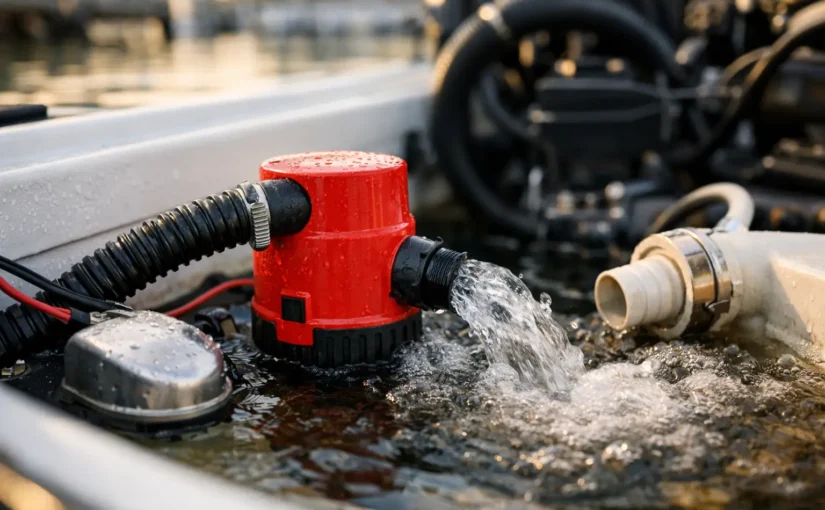
You do not usually find out about a bilge problem at 2:13 a.m. when it starts. You find out at 8:00 a.m. when the batteries are low, the cabin smells damp, and the pump has been cycling for hours. If you want to reduce boat bilge risk overnight, the goal is simple: catch abnormal water and pump activity early enough to act before a nuisance turns into damage.
Nighttime is when small failures get room to grow. A loose hose clamp, a leaking stuffing box, failed shore power, a stuck float switch, or a tired battery bank can push a boat from stable to vulnerable while nobody is onboard. The risk is not just sinking. It is soaked wiring, dead batteries, ruined equipment, corrosion, mold, and expensive cleanup that starts with a problem too small to notice during the day.
Why bilge risk gets worse overnight
A boat sitting quietly at the dock can look perfectly fine at sunset and still have the conditions for trouble. Overnight, there is less traffic, less crew awareness, and often less visual inspection from marina staff. If shore power drops, chargers stop supporting the battery bank. If a pump starts cycling more often than normal, there may be nobody nearby to hear it.
That matters because bilge incidents are often chain reactions, not single-point failures. Water enters. The pump runs more often. Battery voltage falls. Pump performance drops. Water rises faster. Once the system slips behind the rate of intrusion, the recovery window narrows fast.
There is also a difference between a boat that has a bilge pump and a boat that is truly protected. Pumps are part of the answer. Visibility is the rest. Without knowing when the pump is running, how often it is cycling, whether battery voltage is holding, and whether high water is developing, you are relying on luck.
Reduce boat bilge risk overnight with layered protection
The strongest overnight bilge strategy is not one device or one inspection. It is a layered approach built around prevention, detection, and response.
Start with the sources of water ingress. Through-hulls, shaft seals, rudder posts, air conditioning lines, livewell plumbing, cockpit drains, and freshwater systems all deserve attention. Some leaks are obvious. Others are slow enough to hide in normal bilge accumulation until they become a pattern. A boat that always seems to need the pump after midnight is telling you something.
Next, confirm the pump side of the system. The primary pump, float switch, discharge hose, anti-siphon protection where required, fuse protection, and wiring condition all need to be dependable. Marine-grade installation matters here. A pump with undersized wiring or corroded connections may still work on a calm test but fail under real load when voltage drops.
Then add active monitoring. This is where many owners close the real gap. Remote bilge monitoring can alert you to high water, unusual pump activity, shore power loss, and battery decline before the boat reaches a critical state. That gives you time to call the marina, a captain, a yard technician, or a neighboring boater while the problem is still manageable.
The checks that matter before you leave the boat
A fast dockside routine can cut risk more than a long, inconsistent checklist. Focus on what changes the odds overnight.
First, look at bilge condition, not just water level. A mostly dry bilge that suddenly has oily water, debris, or unusual accumulation deserves attention. Debris can jam float switches. Oil and sludge can foul sensors. If the bilge is wet enough that you cannot tell whether water is normal or new, you have already lost valuable visibility.
Second, verify pump operation manually. Do not assume a pump is fine because it worked last month. Trigger the switch, listen to discharge, and confirm the system actually moves water overboard. A pump motor can spin without delivering full output if the hose is kinked, restricted, or partially blocked.
Third, check battery support. Overnight bilge protection depends on usable power. If your charger is not operating, shore power is unstable, or battery voltage is already low at departure, your safety margin is thin. A healthy pump on a weak battery is not a reliable plan.
Fourth, pay attention to patterns. If the pump has been cycling more often lately, do not normalize it. Increased activity usually means one of two things: more water is entering, or the switching logic is inconsistent. Either case deserves inspection before you trust the boat unattended.
Why pump-only protection is not enough
Many owners believe that if the pump works, the boat is protected. That is only partly true. Pumps remove water. They do not explain why water is entering, whether they are keeping up, or whether the electrical system can sustain the load until morning.
A single pump also has practical limits. Heavy rain, a failed hose, backflow, or a split washdown line can outpace a small-capacity setup. A stuck float switch can prevent activation. A failed check valve choice can create restrictions. An unnoticed power issue can leave the system unable to recover after repeated cycles.
This is why overnight bilge protection is really a monitoring problem. You need to know when conditions shift from normal to abnormal. The earlier you know, the cheaper the outcome usually is.
Smart monitoring changes the timeline
The real value of connected monitoring is time. If your boat sends an alert when bilge activity increases, when high water is detected, or when battery voltage starts falling after shore power loss, you do not have to wait until sunrise to learn something is wrong.
That changes your options. A midnight alert about rising bilge water can lead to an immediate call to marina staff. A shore power alert can prompt someone to reset a breaker before battery reserves are exhausted. A high-water alarm can trigger a response while pumps are still functioning, not after they have lost the fight.
For owners who travel, keep boats in remote slips, or leave vessels unattended for days at a time, remote oversight is not a luxury. It is operational protection. EverWatch approaches this the right way: marine-grade hardware, ABYC-aligned installation principles, and multi-channel alerts that are designed to get your attention when a phone notification alone may not.
That matters because bilge risk rarely arrives by itself. The same overnight event can involve water intrusion, power loss, and battery decline at the same time. A connected system that watches those conditions together gives you a more accurate picture than a stand-alone alarm ever will.
The trade-offs boat owners should understand
There is no single setup that fits every vessel. A center console in dry storage has a different overnight risk profile than a sportfish in a wet slip or a trawler on a mooring. The right protection depends on how long the boat sits unattended, the complexity of onboard systems, local weather exposure, and whether someone can physically reach the vessel after an alert.
Simple boats may need only high-water detection, bilge activity tracking, and battery monitoring. Larger or more complex vessels often benefit from shore power monitoring, cabin humidity and temperature awareness, door or hatch alerts, and NMEA2000 data visibility that helps confirm overall system health.
There is also a cost trade-off. Some owners try to piece together consumer alarms, Wi-Fi cameras, and battery gadgets. That can work in narrow cases, but it often creates blind spots. If the marina Wi-Fi drops, if one app fails, or if an alert only goes to one device, you may not know there is a problem until the result is already expensive. Marine-specific systems exist for a reason.
A practical overnight bilge risk standard
If you want a clear standard to aim for, it should look like this: the boat has a clean bilge, tested pumps, dependable battery support, and remote visibility into bilge activity, high water, and power status. That is the baseline.
From there, improve response speed. Make sure alerts reach more than one channel. Make sure someone besides you can get onboard if needed. Make sure your marina, captain, or service contact knows what to do when they receive a call about active bilge alarms.
Most bilge incidents do not begin as disasters. They begin as small changes that go unnoticed for too long. Overnight protection is really about shortening that gap between event and awareness.
A quiet boat at the dock should not be a blind spot. Watch the systems that matter, detect the change early, and give yourself a chance to respond before morning turns a manageable issue into a major repair bill.


 2-Year Warranty
 30-Day Money-Back Guarantee
 U.S.-Based Support