
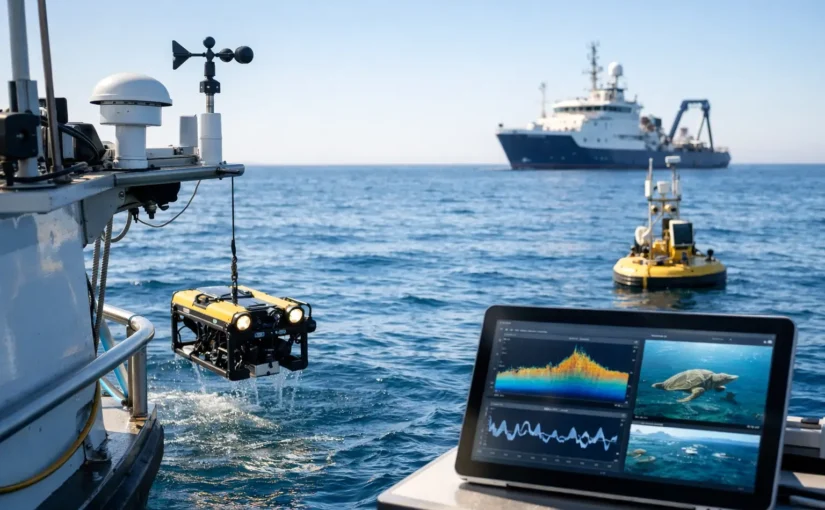
A boat rarely fails when someone is standing next to it. Problems start at 2:13 a.m. after shore power drops, a battery bank begins to sag, or a bilge pump starts cycling more often than it should. That is exactly where a marine monitoring system earns its keep – not as a gadget, but as an early warning layer between a minor issue and a major loss.
For many owners, the real risk is not a dramatic event. It is the quiet, expensive kind. A dead starter battery after a week at the dock. A refrigerator outage that points to lost AC power. Water intrusion that goes unnoticed until damage spreads. A drifting vessel that moved just far enough to become someone else’s problem too. If you leave your boat unattended for days, weeks, or an entire season, remote awareness stops being optional.
Why a marine monitoring system matters
Boats live in harsh conditions, and they sit alone a lot. Marinas lose power. Chargers fail. Bilge pumps stick. Through-hulls seep. Heat and humidity build inside cabins and equipment spaces. Doors and hatches get opened when they should not. Even a well-maintained vessel can develop issues between visits.
The cost of delay is what makes monitoring valuable. If you learn about a problem after visible damage appears, your choices are limited and expensive. If you learn about it when voltage drops, water rises, temperature spikes, or GPS position changes unexpectedly, you still have time to act. That is the difference between sending someone to inspect a boat and filing a major repair claim.
This is also why marine-specific monitoring matters more than generic consumer alarms. A boat is not a house and it is not a car. The electrical environment is different, connectivity is less predictable, and the consequences of false readings or missed alerts are much higher. Salt, vibration, moisture, and long unattended periods punish weak hardware fast.
What a marine monitoring system should actually monitor
At minimum, the system should cover the failures that create the most costly downstream damage. Shore power is near the top of the list because so many onboard systems depend on it while the vessel is docked. When AC power drops, battery charging may stop, refrigeration can fail, and low-voltage conditions can cascade across the boat.
Battery health is just as critical. Voltage trends tell you whether charging is working, whether loads are draining the bank too quickly, and whether a stored vessel is slipping toward a no-start condition. For owners who leave boats unattended, a simple battery alert can prevent a ruined trip or a service call that should never have been necessary.
Bilge activity and high-water detection are non-negotiable. A single high-water alert matters, but the pattern matters too. If the bilge pump starts cycling more often, that can indicate a developing leak, a stuck float switch, or water entering from rain, washdown, shaft seals, or plumbing. A smart system helps you spot the change before the boat is in danger.
GPS position, geo-fencing, and anchor status matter for both security and situational control. If a vessel leaves a defined area, breaks anchor, or moves when it should be stationary, you need immediate notice. That applies to theft, storm movement, marina handling, and tender tracking. Movement alerts are not just for worst-case scenarios. They are often the first sign that something is wrong.
Environmental monitoring fills in the rest. Cabin temperature and humidity affect electronics, interiors, stored provisions, and mold risk. Door and hatch sensors add another layer of unauthorized-access awareness. On more advanced installations, NMEA2000 integration brings engine, transmission, and tank data into the picture, giving owners and operators real visibility into vessel status instead of isolated alarms.
The difference between marine-grade and consumer-grade
This is where many systems look similar on a sales page and very different after a few months onboard.
Consumer IoT devices are built for stable indoor environments. Boats are not stable indoor environments. Marine-grade hardware is designed for vibration, moisture, corrosion exposure, and real wiring requirements. That includes proper power handling, cleaner installations, and better long-term reliability in engine rooms, bilges, cabins, and exposed service spaces.
Installation standards matter too. ABYC-aligned wiring and protection are not marketing fluff. They reduce the chance that the monitoring system itself becomes another failure point. A poorly installed tracker or cheap sensor network can create nuisance alerts, battery drain, or intermittent data loss that teaches the owner to ignore notifications. Once that happens, the whole point of monitoring is lost.
Connectivity is another dividing line. A single-path connection can leave blind spots. If the system relies only on Wi-Fi, you may lose visibility when marina internet drops or local networking changes. If it relies only on cellular, there may be coverage gaps in certain yards, sheds, or remote anchorages. Dual-path options, such as LTE and Wi-Fi, improve uptime and reduce dependence on one connection method.
Alerts are only useful if they force awareness
A good app is important, but the app alone is not the system. The real test is whether the alert reaches you when something is going wrong and whether it reaches you fast enough to matter.
Push notifications are useful for day-to-day awareness. SMS and email add redundancy. Phone-call escalation becomes important when the event is urgent or when the owner is likely to miss a mobile notification. Multi-channel alerting matters because boat emergencies do not wait for someone to check a dashboard.
The best setup is the one that matches the severity of the event. A low house battery might justify a standard mobile alert. High water, unauthorized movement, or a shore power failure during extreme heat may deserve immediate escalation. This is where a purpose-built platform stands apart from a basic tracker. It does not just report data. It helps prioritize response.
It depends on how you use the boat
Not every owner needs the same sensor stack. A center console stored on a lift has a different risk profile than a cruising yacht on shore power full time. A sportfishing boat with integrated electronics and multiple battery banks has different monitoring priorities than a trailerable boat kept in seasonal storage.
For some owners, core protection is enough – shore power, battery voltage, bilge activity, high water, and GPS movement. For others, engine data, tank levels, anchor watch, cabin climate, and entry sensors are worth the investment because they reduce uncertainty across more of the vessel.
Multi-vessel operators have another layer to consider. They are not just protecting one boat. They are trying to maintain oversight across several assets without physically checking each one every day. In that case, centralized visibility and consistent alerting matter as much as the sensors themselves.
What to look for before you buy
The strongest systems combine dependable hardware, expandable sensors, stable connectivity, and clear alert logic. If one piece is weak, the whole system becomes less trustworthy. That is why serious boat owners should ask practical questions.
Can the system monitor the failures that actually put this vessel at risk? Can it expand later as needs change? Does it support real marine data sources like NMEA2000, or is it limited to a few generic sensors? How are alerts delivered, and what happens if one notification path fails? Is the hardware built for long-term marine use, or adapted from another category?
It is also fair to look at the business model. A hardware-plus-service platform generally costs more than a one-time tracker, but it also reflects the ongoing realities of connectivity, data handling, app access, and alert delivery. For owners who want persistent oversight rather than a simple map pin, that recurring service is part of the value.
EverWatch is built around that idea: remote vessel protection that watches critical systems continuously, alerts fast, and gives owners useful visibility instead of scattered data points.
A marine monitoring system is not there to replace maintenance or judgment. It is there to shrink the gap between when a problem starts and when you know about it. On the water, and especially away from the water, that gap is where damage grows. The right system keeps it small.


 2-Year Warranty
 30-Day Money-Back Guarantee
 U.S.-Based Support