
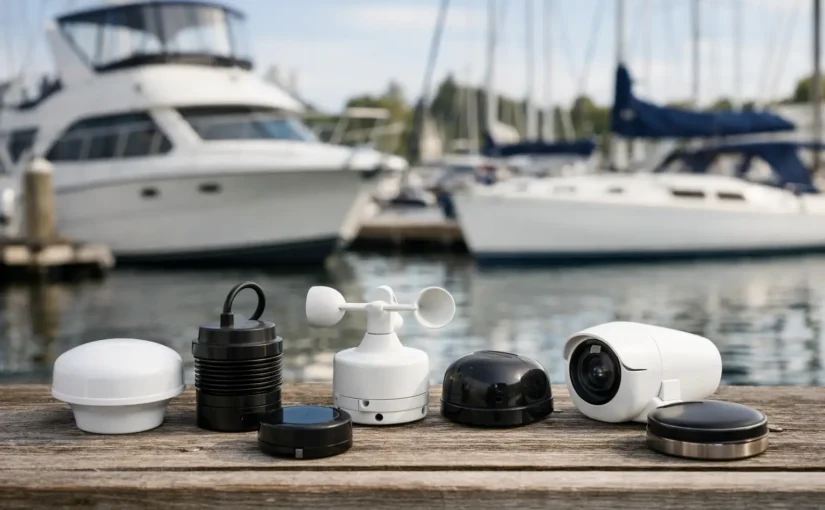
A docked boat can get into trouble faster than most owners expect. Shore power drops at 2 a.m., a bilge pump starts cycling too often, a hatch is left unsecured, or a battery bank slips below a safe threshold while nobody is on board. That is why the top sensors for docked boats are not nice-to-have accessories. They are early-warning tools that help you catch small problems before they become insurance claims, haul-outs, or lost weekends.
The right sensor package depends on how you use the boat, where it is kept, and how much risk you are willing to carry when you are away. A center console at a marina, a cruiser in seasonal storage, and a yacht with multiple onboard systems do not need the exact same setup. Still, a few sensor categories matter on almost every unattended vessel.
What makes the top sensors for docked boats worth installing
A docked boat faces a different risk profile than a boat underway. You are usually not there to hear the bilge pump, smell overheating shore power gear, notice cabin humidity, or see that the boat has shifted outside its slip. The sensor itself is only half the solution. What matters is continuous monitoring, reliable connectivity, and fast alerts that reach you before a preventable issue turns expensive.
Marine conditions also punish weak hardware. Salt air, vibration, moisture, and temperature swings expose the difference between marine-grade equipment and repurposed household devices very quickly. If a sensor is going to protect a vessel full time, it needs to be designed for that environment and installed with proper wiring practices.
1. High-water and bilge activity sensors
If you install only one category of sensor, start here. High-water detection is one of the clearest indicators that a docked boat needs immediate attention. A failed hose, leaking stuffing box, cracked fitting, clogged drain, or storm-driven intrusion can put water where it should not be. By the time a neighbor notices a low stern, the damage may already be severe.
Bilge activity monitoring adds another layer. A bilge pump may still be keeping up, but frequent cycling often signals a developing leak or water ingress issue. That is the kind of event that owners miss when they rely on occasional dock walks. A high-water sensor tells you when the situation is critical. Bilge cycle monitoring tells you when the situation is trending the wrong way.
For many docked boats, this is the first line of defense.
2. Shore power sensors
Shore power failure is one of the most common dockside problems and one of the easiest to underestimate. Lose shore power and the effects can spread quickly – dead batteries, warm refrigerators, disabled chargers, offline security devices, and failed climate control. On larger boats, the cascade can be even more serious.
A shore power sensor gives you immediate notice that dock power has dropped or onboard AC input is no longer present. That matters whether the fault is at the pedestal, the cord, the inlet, or somewhere in the vessel’s electrical chain. For owners who leave boats unattended for days or weeks, this sensor belongs near the top of the list.
It is especially important for boats with battery chargers, dehumidifiers, refrigeration, or systems that are expected to stay online continuously.
3. Battery voltage sensors
Even when shore power is available, batteries still deserve direct monitoring. Chargers fail. Breakers trip. Parasitic loads increase. Battery banks age out. A voltage sensor gives you a straightforward view of the vessel’s electrical health and tells you when the reserve you are counting on is disappearing.
For docked boats, battery monitoring is not only about starting engines. It is also about keeping pumps, alarms, communications devices, and control systems alive. If voltage drops too far, your other protections can go dark right when you need them.
More advanced owners may want a deeper battery picture with multiple banks and charging status. Others simply need a clean alert when voltage leaves a safe range. Either way, battery visibility is foundational.
4. Temperature and humidity sensors
Environmental damage builds quietly. Heat inside the cabin can stress electronics, dry out finishes, and affect onboard goods. Cold snaps can threaten plumbing and machinery spaces. High humidity invites mildew, corrosion, mold growth, and persistent interior odor that takes real effort to reverse.
Temperature and humidity sensors are among the most useful tools for owners who keep boats closed up at marinas, in dry storage, or in seasonal layup. They are also practical for boats with pets aboard for short periods, wine storage, sensitive electronics, or climate-controlled interiors.
The trade-off is urgency. A humidity alert usually is not a same-minute emergency like high water. But it often points to a long-term condition that is expensive to ignore. Good monitoring catches that early.
5. Door, hatch, and access sensors
Unauthorized access is not always dramatic theft. Sometimes it is a hatch left open after service, a lazarette that did not latch fully, or someone boarding the boat without permission. Door and hatch sensors give you confirmation that access points are secure and create immediate visibility when they are not.
For docked boats in busy marinas, urban waterfronts, or storage yards, this category matters more than many owners realize. A compromised hatch can also become a weather issue if rain enters or wind works the opening wider over time.
These sensors are simple, but their value is direct. You know whether the boat was opened, when it happened, and whether it remains unsecured.
6. GPS position and geofence sensors
A boat does not have to be stolen outright to be where it should not be. It may drift from a slip, get moved without authorization, break loose during weather, or be repositioned by a yard or contractor without notice. GPS tracking with geofence alerts tells you when the vessel’s location changes beyond an approved boundary.
For docked boats, this is less about navigation and more about custody. If the boat leaves the marina, shifts from the assigned area, or moves at an unusual hour, you want to know immediately. Owners with tenders, trailerable boats, or multiple vessels often put this near the top of their monitoring list.
Position data is also more useful when paired with other sensors. If shore power drops and the boat leaves the geofence soon after, that pattern tells a very different story than a simple power interruption.
7. Water intrusion sensors beyond the bilge
Not all water problems start low in the hull. Cabin leaks, window seal failures, leaking deck hardware, and plumbing issues can cause damage well before bilge water rises enough to trigger a high-water alarm. Water intrusion sensors placed in vulnerable areas such as cabins, equipment spaces, or under appliances can catch a different class of issue.
This is especially valuable on enclosed cruisers, yachts, and boats with finished interiors. Soft goods, cabinetry, electronics, and flooring can all suffer from leaks that stay localized at first. Owners often discover these problems after the damage has spread.
If your boat has multiple enclosed spaces, targeted water detection can be smarter than relying on one sensor in one low point.
8. NMEA 2000 engine, tank, and system data sensors
For more sophisticated boats, the top sensors for docked boats may include direct access to NMEA 2000 data rather than standalone point sensors alone. This opens the door to monitoring engine parameters, tank levels, transmission data, and other vessel systems through a single connected platform.
This is not necessary for every owner. A smaller outboard boat used close to home may not need that level of visibility. But on larger cruisers, yachts, and multi-system vessels, integrated system data can shorten troubleshooting time and give you a more complete picture of what changed while you were away.
The real advantage is context. Instead of receiving isolated alarms, you can see how electrical, mechanical, and environmental conditions relate to each other.
How to choose the right sensor stack
Start with failure consequences, not gadget count. Ask what can sink the boat, disable the boat, damage the boat, or expose the boat to theft while it is unattended. For most owners, that means beginning with high water, bilge activity, shore power, and battery voltage. Those four cover the most common high-cost dockside events.
Then add sensors based on your environment. If your marina has security concerns, add door, hatch, and GPS monitoring. If your boat stays closed up in a humid climate, add temperature and humidity. If you own a larger vessel with networked systems, NMEA 2000 integration becomes more compelling.
The final piece is alerting. A sensor that records a problem but does not reliably notify you is only half working. The strongest setups use dedicated marine hardware, stable connectivity, and multiple alert paths so you are not depending on a single app notification to protect a major asset.
That is where a purpose-built marine monitoring system earns its keep. EverWatch, for example, combines expandable sensors, marine-grade hardware, app visibility, and real-time alerts so owners can watch critical dockside conditions without piecing together consumer devices that were never built for life on the water.
A protected boat is not the one with the most electronics. It is the one that tells you early, clearly, and reliably when something changes. Choose the sensors that match your real dockside risks, and you give yourself the one thing every absent owner needs most – time to respond.