
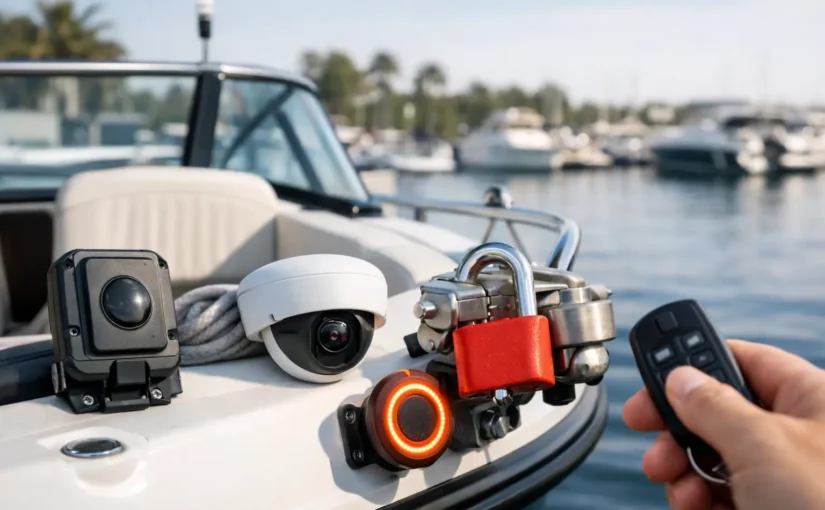
A stolen boat is rarely a clean-loss event. Even when a vessel is recovered, owners can face damaged wiring, missing electronics, cut dock lines, drained batteries, insurance disputes, and weeks off the water. The best boat theft prevention devices do more than make theft harder. They detect unauthorized access or movement early enough for you to respond while there is still time.
The strongest protection is layered. A visible lock may deter an opportunist. A hidden GPS tracker can help locate a vessel after it moves. A connected monitoring system can alert you the moment a hatch opens, shore power is interrupted, or your boat leaves its approved location. Each device handles a different point in the theft timeline.
What Makes a Boat Security Device Worth Buying?
Boat security is not one-size-fits-all. A center console on a trailer has different exposure than a yacht in a gated marina, and a boat on a mooring faces different risks than one in dry storage. Start with the question that matters: What could be taken, moved, or accessed before anyone notices?
The most effective devices provide one or more of three protections: deterrence, detection, and recovery. Deterrence makes a thief choose another target. Detection tells you something is happening. Recovery gives law enforcement and insurance providers useful location data after the fact.
For vessels left unattended for days or weeks, real-time alerts matter more than a siren alone. An alarm that sounds at the dock may go unheard. An alert delivered to your phone, by text, email, or call gives you the opportunity to contact marina security, a neighbor, or local authorities immediately.
1. Connected Boat Monitoring and Intrusion Alerts
A connected monitoring system is the most complete option for owners who want remote oversight rather than a single-purpose theft device. It can combine GPS location, geo-fencing, door and hatch sensors, battery monitoring, shore power status, bilge activity, and water intrusion alerts in one marine-specific platform.
This matters because theft often begins with a smaller event. A cabin door opens after hours. A hatch is lifted. Shore power is disconnected before electronics are removed. The boat moves outside its normal slip area. Receiving an immediate alert lets you verify what is happening instead of discovering the problem on your next visit.
EverWatch Systems provides this kind of layered remote visibility through marine-grade hardware, expandable onboard sensors, and dual LTE and Wi-Fi connectivity. Its system can send push, SMS, email, and phone-call alerts, while giving owners access to vessel data through a mobile app. For NMEA2000-equipped boats, engine, transmission, and tank data can also be part of the monitoring picture.
The trade-off is installation and subscription cost. For a high-value vessel, a remote boat, or a multi-vessel operation, that ongoing connection is usually the point. A tracker that reports only after a boat is gone is not the same as a system built to detect the first sign of trouble.
2. GPS Trackers With Geo-Fencing
A dedicated GPS tracker is one of the best boat theft prevention devices for recovery. Hidden properly, it can show a vessel’s location after it is moved and send an alert when it exits a defined geographic boundary.
Look for a marine-ready tracker with its own backup battery, reliable cellular coverage, and frequent location updates. A geo-fence should be easy to set around a marina, storage yard, anchorage, or mooring field. The alert needs to arrive quickly enough to be useful, not hours after the boat has been trailered across county lines.
GPS trackers do have limits. They may not detect entry into the boat, removal of equipment, or a thief who disables power before moving the vessel. Cellular service can also be inconsistent in remote areas. Use tracking as part of a broader security plan, not as your only line of defense.
3. High-Quality Trailer Coupler and Wheel Locks
For trailerable boats, the trailer is often the easiest theft path. A thief does not need to defeat the boat’s ignition system if they can simply hitch the trailer and leave.
A hardened coupler lock blocks access to the trailer hitch. A wheel lock, also called a tire boot, prevents the trailer wheel from rotating. Use both when a boat is stored at home, in an open lot, or at a ramp-side facility. The combination is visible, inconvenient to defeat, and far more effective than relying on a standard hitch pin.
Choose corrosion-resistant hardware designed for outdoor use. Cheap locks can seize after a season in salt air, leaving the owner with the problem they were meant to prevent. Also confirm the lock fits your exact coupler and wheel size before relying on it.
4. Outboard Motor Locks and Engine Immobilizers
Outboard theft remains a serious concern because engines are valuable, identifiable, and often accessible from the dock. A transom-mounted outboard lock covers or secures mounting hardware, making it harder to remove an engine quickly. It is a deterrent, not an invincible barrier, but it can add enough time and noise to discourage a fast theft.
An engine immobilizer adds another layer by preventing the engine from starting without an authorized key, fob, code, or switch position. This is particularly useful for boats kept in shared slips or at private docks where someone may gain access to the cockpit.
Neither option replaces physical security around the vessel. A determined thief may still tow the boat, remove electronics, or attempt to defeat controls. Pair engine protection with geo-fencing and intrusion alerts so you know if the vessel is being accessed or moved.
5. Cabin Door, Hatch, and Compartment Sensors
Many marine thefts involve electronics, fishing gear, tools, safety equipment, and personal items rather than the entire boat. Door and hatch sensors are simple, highly practical devices that report when a protected opening changes state.
Install sensors where a thief is most likely to enter: cabin doors, hardtop electronics boxes, lazarette hatches, rod lockers, and storage compartments. On larger boats, divide sensors into zones so an alert identifies the location of the breach rather than simply reporting a generic alarm.
These sensors work best when tied to a connected alert system. A local buzzer can help at a private dock, but it is less useful in a busy marina or storage yard after hours. Remote notification puts actionable information in your hands wherever you are.
6. Marine Security Cameras and Visible Warning Signs
Cameras do not physically stop theft, but they create deterrence and preserve evidence. A clearly visible camera can change a thief’s risk calculation, especially when paired with signage stating that the vessel is monitored.
For practical use, choose a camera with low-light performance, weather resistance, secure mounting, and remote viewing. Consider its power source carefully. Battery cameras can be convenient, but they require regular charging and may miss extended activity. Hardwired cameras are more dependable when installed correctly, especially if the boat has reliable shore power and battery monitoring.
Cameras should not be your only device. A camera may record a theft without notifying you until later. Combine video with motion, hatch, or geo-fence alerts that prompt you to check the live view immediately.
7. Battery Disconnects and Hidden Kill Switches
A battery disconnect or concealed kill switch can prevent an unauthorized person from starting the engine. It is a low-cost layer that works well on smaller vessels and boats stored without constant supervision.
The key is placement. A switch in an obvious location provides limited protection. A properly installed, discreet switch should be accessible to the owner and technician while remaining difficult for an intruder to find quickly. Installation should follow marine electrical best practices, particularly on boats with multiple battery banks, charging systems, or sensitive electronics.
Do not use a battery disconnect as an excuse to leave the boat unmonitored. Disconnecting power can also take GPS trackers, cameras, and connected security devices offline unless they have a backup power plan.
Build a Layered Theft Prevention Plan
The right system depends on where and how you keep your boat, but most owners benefit from a mix of visible deterrents and hidden detection. A practical setup may include:
- A GPS geo-fence for unauthorized vessel movement
- Door and hatch sensors for after-hours entry
- A connected alert system with cellular backup
- Trailer, outboard, or engine-start protection based on vessel type
- Cameras where dock access or storage-lot exposure is a concern
Also protect the details thieves use to target a vessel. Remove portable electronics and expensive gear when practical. Record serial numbers for engines, electronics, trailers, and major equipment. Keep registration documents out of sight. At marinas and storage facilities, make sure your emergency contact information is current with management.
The goal is not to make your boat impossible to steal. No device can promise that. The goal is to make theft difficult, detectable, and time-sensitive – while giving you the information needed to act before a small security breach becomes a major loss. Your boat should never be unprotected simply because you are not aboard.