
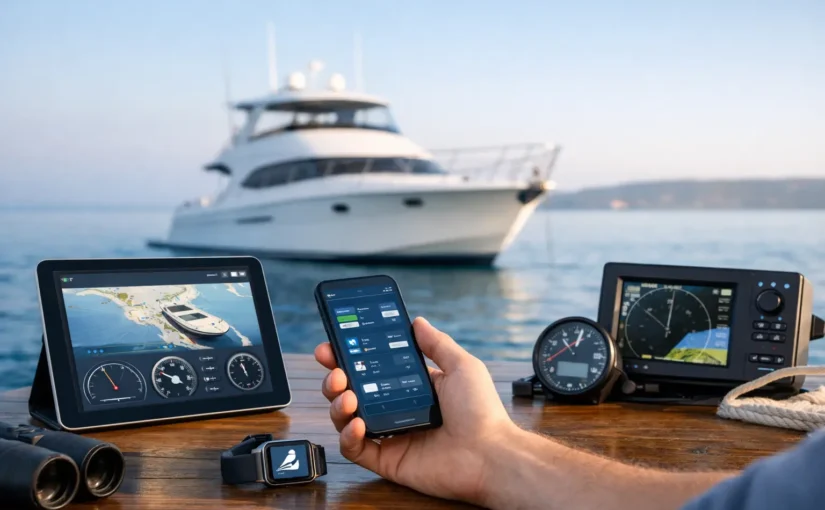
If your boat sits unattended for days or weeks, the wrong monitoring setup can cost you far more than the hardware ever will. Shore power fails. Batteries drop. Bilge pumps cycle too often. Water gets in where it should not. That is why more owners are comparing the best boat monitoring platforms before the next missed alert turns into a haul-out, insurance claim, or ruined weekend.
What separates the best boat monitoring platforms
Not every platform is built for real vessel oversight. Some are basically GPS trackers with a mobile app. Others are repurposed consumer IoT products that work fine in a garage but start to show limits in a wet, vibrating, corrosion-prone marine environment.
The best boat monitoring platforms do three things well. First, they watch the right systems – not just location, but power, battery condition, bilge activity, intrusion, temperature, and onboard network data where available. Second, they deliver alerts reliably through more than one path. Third, they are designed for the way boats are actually used: at the dock, in storage, on the mooring, or left at anchor without anyone onboard.
That last point matters. A platform that looks good on a feature list can still be a poor fit if it depends on marginal connectivity, lacks marine-grade hardware, or makes expansion difficult once your monitoring needs grow.
How to evaluate a boat monitoring platform
The strongest buying decisions usually come down to coverage, alerting, installation quality, and long-term operating value.
Coverage means what the system can actually monitor. At a minimum, most owners should care about shore power status, battery voltage, high water or bilge activity, GPS position, and cabin conditions such as temperature or humidity. If you own a larger vessel or travel often, it is worth looking at platforms that can also monitor doors, hatches, water intrusion, tank levels, anchor position, and NMEA2000 engine or transmission data.
Alerting is where many systems separate quickly. Push notifications alone are not enough for a serious marine application. If your phone is in Focus mode, your app logs out, or a notification gets buried, you can miss the one alert that mattered. Better platforms layer push with SMS, email, and in some cases phone calls.
Installation quality also deserves more attention than buyers usually give it. Marine-grade wiring, ABYC-aligned practices, and proper sensor integration are not cosmetic details. They affect reliability, serviceability, and safety. The more expensive the boat, the less sense it makes to rely on loosely adapted consumer gear.
Then there is operating value. Some platforms look inexpensive up front because they do very little. Others cost more because they include cellular service, a stronger controller, broader sensor support, or vessel-wide data integration. The right question is not just what it costs. The right question is what kind of loss it can help you prevent.
7 best boat monitoring platforms to compare
1. EverWatch
For owners who want full-time remote vessel oversight rather than a single-purpose tracker, EverWatch stands out as one of the best boat monitoring platforms on the market. Its strength is breadth. It is built to monitor shore power, battery health, bilge activity, water intrusion, temperature, humidity, GPS position, geofencing, anchor status, doors, hatches, and NMEA2000 data including engine, transmission, and tank information.
The platform is also designed like a serious marine system. Marine-grade hardware, ABYC-aligned wiring standards, dual LTE and Wi-Fi connectivity, and expandable sensor architecture all point to a product meant for unattended boats in the real world, not just for checking location on a map. Alerts can be sent through push, SMS, email, and phone calls, which gives owners a much better chance of seeing a problem before it spreads.
This type of system is best for owners who think in terms of prevention. If your boat is kept in a slip, dry storage, or on a mooring and you want a single monitoring stack instead of piecing together separate alarms, trackers, and battery gadgets, this approach makes sense.
2. Siren Marine
Siren Marine is a known name in remote boat monitoring and is often considered by owners looking for app-based security and vessel alerts. Depending on the package, users can monitor battery voltage, bilge activity, high water, temperature, entry sensors, and GPS location.
Its appeal is brand familiarity and a marine-focused feature set. The trade-off is that buyers need to look carefully at what sensors and subscriptions are included versus added later. For some owners, Siren is enough. For others, especially those who want deeper vessel data or a more comprehensive sensor strategy, it may feel like a midpoint rather than a full monitoring environment.
3. Yamaha Siren Connected Boat packages
For owners already inside the Yamaha ecosystem, connected packages built around Siren can feel convenient. They offer a familiar app experience and tie into select vessel configurations in a way that reduces some setup friction.
The convenience comes with limits. Brand-tied solutions can be a strong fit when your boat matches the intended setup, but they are not always the best option for mixed fleets, refits, or owners who want broader customization across systems and sensors. If flexibility matters as much as brand alignment, compare carefully.
4. Garmin OnDeck
Garmin OnDeck is attractive to owners who already run Garmin electronics and want monitoring tied into that environment. It typically covers battery status, bilge, shore power, door sensors, temperature, and GPS-based location functions.
Its main advantage is integration with a broader Garmin helm experience. Its main question mark depends on your boat. If you are heavily invested in Garmin, that integration can be compelling. If not, OnDeck may not offer enough standalone advantage to outweigh other platforms that are more focused on remote monitoring first and electronics ecosystem second.
5. GOST remote security systems
GOST is usually discussed more in the context of marine security than broad vessel health monitoring. It can be a smart choice for owners focused on intrusion, theft deterrence, tracking, and security alerts, especially on higher-value yachts.
Where buyers need clarity is scope. A security-first platform is not always the same thing as a full boat condition monitoring platform. If unauthorized entry and theft are your top concerns, GOST deserves a look. If your bigger worry is shore power loss, bilge cycles, battery decay, and onboard system awareness, you may need more than a security stack.
6. Spotlight X by Globalstar
Spotlight X is more of a satellite asset tracking and monitoring solution than a full recreational boat systems platform, but it can fit certain use cases. Owners with vessels in remote areas or with limited cellular coverage may appreciate satellite-based visibility.
The trade-off is depth and practicality for everyday marina-based monitoring. Satellite tracking solves a different problem than a dockside platform that watches bilge pumps, AC power, humidity, and engine network data. For some commercial or expedition use cases, that distinction matters less. For most recreational owners, it matters a lot.
7. DIY smart sensors and trackers
Some owners try to build their own setup with a GPS tracker, battery monitor, Wi-Fi camera, and a few app-connected sensors. It can work, at least on paper, and the entry cost may look lower at first.
This is where cheap becomes expensive. Consumer devices often have mismatched apps, separate subscriptions, weak marine hardening, and inconsistent alert logic. If one sensor drops offline or your marina Wi-Fi becomes unstable, you may not know whether your boat is safe or your monitoring stack just stopped talking. DIY works best for hobbyists who enjoy constant troubleshooting. It is a poor choice for owners who want dependable oversight.
Which platform is right for your boat
The answer depends on the level of risk you need to manage.
If your biggest concern is location tracking, a simpler platform may be enough. If you want to know whether your boat moved, left a geofence, or lost anchor position, you do not necessarily need a full vessel data system.
If your boat stays plugged into shore power, sits through storms, or goes unattended for long stretches, basic tracking is not enough. That is where the best boat monitoring platforms prove their value. You need visibility into AC power status, battery health, bilge behavior, water intrusion, cabin conditions, and alert delivery that does not depend on a single notification channel.
For larger boats and more advanced owners, NMEA2000 support can also change the equation. Engine data, transmission status, and tank information help move monitoring from simple alarm notification to real operational awareness. That matters when you are managing maintenance remotely, checking vessel readiness before a trip, or overseeing multiple boats.
The real cost is the problem you do not catch
Most owners do not buy monitoring because they love gadgets. They buy it because a dead battery bank, failed shore power connection, hidden leak, or stolen vessel is expensive, disruptive, and often preventable if caught early.
That is the standard worth using when you compare platforms. Not which app icon looks nicest. Not which box is cheapest. Ask which system is most likely to detect a real issue fast, reach you through an alert you will actually see, and give you enough information to act before damage spreads.
A good platform helps you check on your boat. A strong platform helps protect it when you cannot be there. That is the difference that matters when the weather turns, the dock loses power, or the bilge pump starts running at 2:13 a.m.