
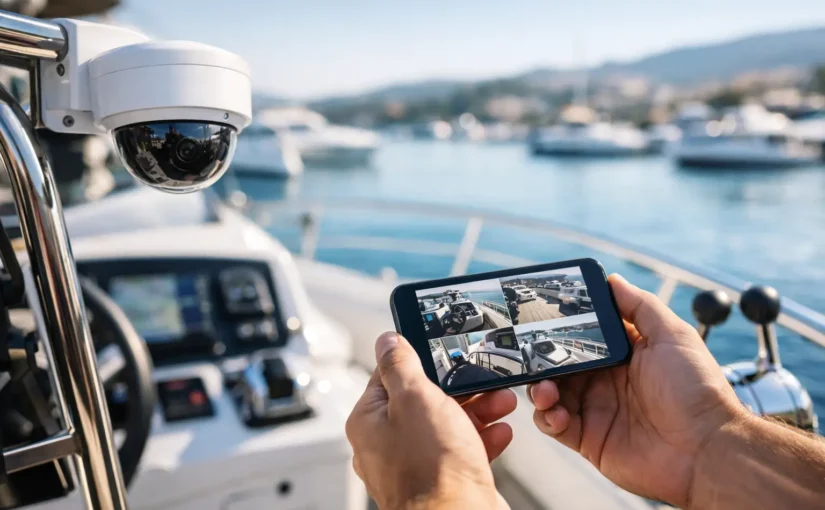
A failed shore power cord at 2:14 a.m. does not stay a small issue for long. Battery chargers go offline, refrigeration warms up, bilge pumps start drawing down the bank, and by sunrise you may be looking at spoiled systems, dead batteries, or worse. That is the real job of boat security monitoring – catching trouble early enough that you still have options.
For many owners, security used to mean a lock on the cabin door and maybe a GPS tracker hidden onboard. That is no longer enough. Boats are vulnerable in more ways than simple theft. Water intrusion, bilge pump run events, shore power loss, low battery voltage, frozen cabins, overheated engine rooms, open hatches, and unauthorized movement can all create expensive damage when no one is there to see it. A true monitoring system watches the whole vessel, not just its location.
What boat security monitoring should actually cover
A boat sitting at a dock, in dry storage, on a mooring, or at anchor faces different risks depending on season, location, and onboard systems. That is why a serious system has to watch multiple conditions at once. Position matters, but so do power, water, and access points.
At a minimum, effective boat security monitoring should track shore power status, battery health, bilge activity, and GPS position. Those four tell you whether the boat is powered, whether the electrical system is holding, whether water is becoming a threat, and whether the vessel is where it should be. Add door and hatch sensors, temperature and humidity monitoring, and water intrusion detection, and the system becomes much more useful for unattended boats.
For owners of larger boats or more complex systems, monitoring should go further. Engine data, tank levels, transmission information, and other NMEA2000 data can provide early warning that something is drifting out of normal before it becomes a service call. That level of visibility matters when the boat is a high-value asset, not just a weekend toy.
Why simple alarms and trackers fall short
A standalone siren can scare off a casual intruder. A basic tracker can tell you where the boat ended up. Neither helps much when a charger fails quietly overnight or a float switch starts cycling every few minutes.
This is where many owners get stuck with a patchwork setup. They add one device for GPS, another for batteries, and maybe a camera if marina Wi-Fi cooperates. The result is more apps, more points of failure, and more blind spots. Consumer smart-home gear also tends to struggle in the marine environment. Moisture, vibration, unstable power, poor connectivity, and salt exposure are hard on hardware that was built for a living room.
Marine-specific monitoring exists for a reason. The hardware has to be designed for the environment. The wiring should reflect ABYC-aligned safety practices. Connectivity should not rely on a single fragile path. And alerts need to be immediate, clear, and persistent enough to wake you up when the event actually matters.
The difference between data and protection
Some systems collect vessel data. Fewer systems turn that data into actionable protection.
Protection starts with the right sensor architecture. If the system only monitors a few conditions, it can miss the chain reaction that causes real damage. For example, shore power loss by itself may not sound catastrophic. But paired with dropping battery voltage and a high-temperature alert in the cabin, it tells a more urgent story. Good monitoring shows the relationship between events, not just isolated readings.
It also depends on how alerts are delivered. Push notifications are useful, but they should not be the only option. If a boat is taking on water or leaves a geofence, owners need escalation paths that can include text, email, and phone calls. Speed matters, but reliability matters more. The point is not to create noise. The point is to make sure the right person knows what happened in time to act.
That is why subscription-backed monitoring often makes more sense than a one-time gadget purchase. Ongoing connectivity, app access, alert routing, and system visibility are part of the protection model. Hardware without dependable service is just installed potential.
Boat security monitoring for real-world risks
The best systems are judged by the incidents they help prevent.
If shore power fails at the dock, you want an alert before the batteries are drained and critical loads shut down. If bilge activity spikes, you want to know whether it is a normal pump cycle after rain or a pattern that suggests active ingress. If the boat moves outside a geofence, you need more than a breadcrumb trail hours later. You need immediate awareness that lets you call the marina, a captain, or law enforcement while the event is still unfolding.
Environmental monitoring matters too, especially for seasonal owners. A temperature drop can threaten plumbing and onboard equipment during winter storage. Excess humidity can damage interiors, electronics, and soft goods long before mold becomes visible. An open hatch during a storm is not just an inconvenience. It can become a major water event.
This is where remote visibility changes the ownership experience. Instead of wondering whether the boat is fine, you can check actual conditions. Instead of driving to the marina after every rumor of a power outage, you can verify what happened and respond based on facts.
Connectivity is not a small detail
A monitoring system is only as dependable as its ability to stay connected when the boat is unattended. This is one of the most overlooked buying factors.
Wi-Fi can work well in some marinas and fail badly in others. Cellular is often more dependable, but coverage varies by region and carrier conditions. The strongest setups use both, with the ability to maintain communication when one path becomes unreliable. Dual-path connectivity is not a luxury for remote boat protection. It is part of what makes the system credible.
The same logic applies to onboard power resilience. If a system stops reporting the moment primary power is interrupted, it may go silent during the exact event you needed it to capture. Owners should ask how the device behaves during outages, what data remains visible, and how quickly alerts are sent when a fault begins.
Installation matters more than many owners expect
Good monitoring can be weakened by poor installation. Boats are not forgiving when wiring is sloppy or sensors are placed without understanding how the vessel actually operates.
That is why marine-grade components and ABYC-aligned installation practices matter. Sensors need to be mounted where they will detect real issues, not nuisance conditions. Power connections should be stable and protected. GPS placement, hatch switch positioning, bilge sensor logic, and NMEA2000 integration all affect whether the system is genuinely useful or just technically present.
For hands-on owners, expandability also matters. A boat’s monitoring needs often grow over time. You may start with shore power, batteries, bilge, and GPS. Later, you may want engine data, tank levels, additional doors or hatches, temperature zones, or anchor monitoring. A system that can scale with the boat is usually a better long-term decision than a fixed device that solves one narrow problem.
How to evaluate a boat security monitoring system
The right question is not, “Does it send alerts?” Nearly every device claims that. The better question is, “What exactly can it watch, how reliably can it report, and what can I do with the information?”
Look for a system that covers core vessel risks, uses marine-grade hardware, supports more than one connectivity path, and gives you a clear mobile view of what is happening onboard. If you run a larger yacht or manage multiple vessels, sensor depth and fleet visibility become more important. If you are a seasonal owner, environmental alerts and shore power awareness may lead the list. It depends on how the boat is used and how long it is left unattended.
A strong platform should also reduce stress, not add to it. The app should be easy to check. Alerts should be specific. Historical data should help you understand patterns, such as recurring low-voltage events or unusual bilge pump activity. Technical depth is valuable, but only if the information is organized in a way that supports fast decisions.
This is where a purpose-built platform stands apart from cobbled-together consumer devices. EverWatch Systems, for example, is designed around persistent remote oversight with marine-grade hardware, expandable sensors, app visibility, and alert delivery across push, SMS, email, and phone calls. That kind of integrated approach is what boat owners should be looking for if they want coverage that holds up in the real world.
Boat ownership always comes with some uncertainty. Weather shifts. Marina power fails. Equipment ages. People make mistakes. The right monitoring system does not eliminate every risk, but it gives you earlier warning, better visibility, and a much better chance to respond before a small problem becomes a major loss. If your boat spends any serious time unattended, that is not extra tech. It is basic protection.


 2-Year Warranty
 30-Day Money-Back Guarantee
 U.S.-Based Support