
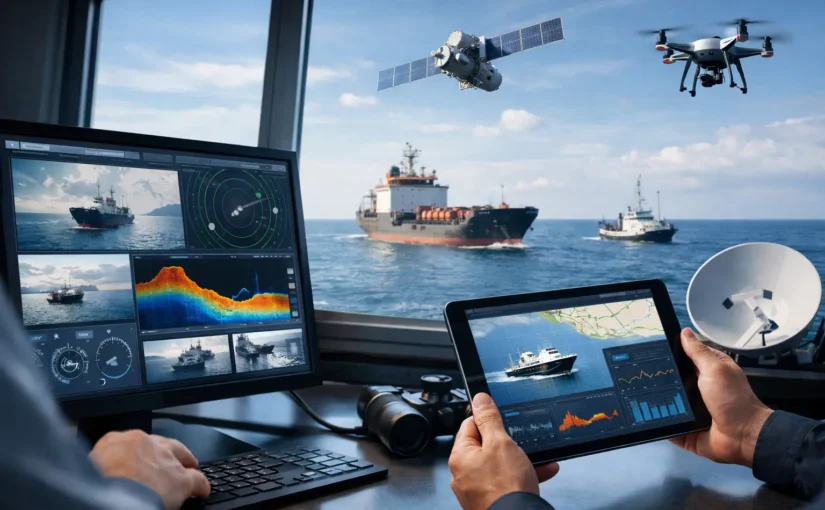
A dead battery bank, a failed shore power pedestal, or a bilge pump cycling too often can turn a normal week away from the marina into a major repair bill. The best vessel monitoring features are the ones that warn you early, show you what changed, and give you enough context to act before a small issue becomes hull damage, battery loss, or theft.
That sounds simple, but not every monitoring system is built for real marine risk. Some products are really just trackers. Others send a basic low-battery alert and stop there. A serious vessel monitoring platform needs to watch power, water, movement, onboard conditions, and key system data at the same time. It also needs to keep reporting when conditions change, not just send one message and disappear.
What the best vessel monitoring features should actually do
Good monitoring is not about collecting more data for its own sake. It is about detecting the failures that cost boat owners the most money and time. That usually means power loss, flooding, battery depletion, unauthorized movement, and environmental conditions that damage equipment and interiors.
The strongest systems also reduce false confidence. A nice-looking app is not enough if the hardware is not marine-grade, the wiring is not installed to accepted marine standards, or the alerts only travel through one communication path. Boats live in wet, corrosive, vibration-heavy environments. Monitoring hardware has to be built for that reality.
1. Shore power monitoring with immediate alerts
For many docked boats, shore power is the first thing to watch. Lose AC power and the next problems line up fast – battery chargers shut off, refrigeration warms up, dehumidifiers stop, and battery banks begin to drain. If freezing protection or onboard systems depend on that power, the risk goes up even more.
The best vessel monitoring features include real-time shore power loss alerts, not just a vague status indicator in an app. You want to know when power drops, when it returns, and how long the interruption lasted. That timing matters because a brief pedestal reset is very different from an overnight outage.
Some owners only need simple on-off detection. Others want a fuller view of related systems so they can see whether charger activity and battery voltage changed after the outage. That extra context helps you decide whether to call the marina, dispatch a captain, or keep watching.
2. Battery voltage and charging visibility
Battery issues cause more than no-start events. Low voltage can knock out pumps, security devices, refrigeration controls, and networked electronics. On unattended boats, a battery problem often starts quietly and gets expensive later.
A useful system should show current voltage, trends over time, and alert thresholds that match the battery setup. A single alert at one low-voltage point is better than nothing, but it is not enough for every boat. House banks, start batteries, and charging sources all behave differently.
This is where better monitoring separates itself from consumer-grade gadgets. If shore power drops and battery voltage starts falling, you need both signals. One alert tells you what failed. The second tells you how urgent the problem has become.
3. Bilge pump activity and high-water detection
If you only monitor one flooding signal, make it high water. If you want real protection, pair that with bilge pump activity. Those two data points together tell a much clearer story.
A high-water alert means the problem is already critical. Bilge pump cycle monitoring can catch the issue earlier. If a pump starts running more often than normal, something changed – a leaking stuffing box, failed hose, heavy rain intrusion, or a hull-side issue. That warning window is where damage prevention happens.
The trade-off is setup complexity. High-water sensors are straightforward. Bilge activity monitoring may require more system planning, especially on boats with multiple pumps or zones. Still, for owners leaving boats unattended for long stretches, it is one of the most valuable upgrades you can make.
4. Water intrusion sensors beyond the bilge
Not every damaging water event ends up in the bilge first. A leaking window, failed hatch seal, or plumbing issue inside a cabin can soak finishes, upholstery, flooring, and electrical spaces before the bilge tells you anything meaningful.
That is why the best vessel monitoring features often include water intrusion sensors in specific compartments. Near freshwater pumps, under water heaters, inside machinery spaces, and in accommodation areas are common choices. This is especially useful on larger boats where one central alarm point misses localized problems.
It depends on the vessel layout. A center console stored on a lift has different exposure points than a cruising yacht in a slip. Expandable sensor architecture matters because no two boats have the same risk map.
5. GPS position, geo-fencing, and unauthorized movement alerts
A tracker that only shows location after you open the app is not enough. True vessel security means the system tells you when the boat moves when it should not, leaves a defined boundary, or drifts from anchor.
Geo-fencing is one of the most practical anti-theft and dockside protection tools available. If your boat leaves the marina, storage yard, or mooring area without authorization, you need that alert immediately. For boats at anchor, position monitoring can also serve as an anchor-drag warning, which is a very different use case but just as important.
Accuracy matters here, but alert logic matters just as much. Boats shift slightly in slips and swing at anchor. A good system accounts for normal movement so you are not trained to ignore alerts.
6. Temperature and humidity monitoring
Environmental damage builds slowly, then shows up all at once. Mold growth, swollen woodwork, failed electronics, spoiled stores, and heat-stressed equipment often start with cabin conditions that went unchecked for days or weeks.
Temperature and humidity monitoring is especially important for seasonal owners, boats in hot southern climates, and vessels relying on shore-powered climate control. If AC fails in midsummer, an interior can deteriorate quickly. If winter temperatures drop unexpectedly, freeze risk becomes the concern.
This feature is easy to underestimate because it does not feel as urgent as flooding or theft. But interior restoration and equipment replacement are expensive, and environmental alerts often give you plenty of time to respond if they come early enough.
7. Door and hatch status
Physical access monitoring is simple, but useful. If a hatch is left open before a storm or a door opens when the boat should be secured, you want to know. This is part security, part weather protection, and part operational discipline.
For some owners, this is a nice extra. For others, especially on larger yachts, tenders, or boats with frequent service access, it is a core feature. It helps answer a basic question fast: was the vessel opened, and when?
The value increases when these alerts are combined with movement or location events. A hatch alert by itself may be minor. A hatch alert followed by vessel movement is a different level of concern.
8. NMEA 2000 engine, transmission, and tank data
Basic monitoring covers risk. Integrated monitoring adds operating insight. For technically minded owners and multi-vessel operators, access to NMEA 2000 data can make a system far more useful.
Engine parameters, transmission data, and tank levels give you a broader picture of vessel status without needing separate displays or pieced-together apps. Fuel and tank visibility can be valuable for trip planning, service scheduling, and spotting abnormal consumption. Engine-related data can also support troubleshooting if an alert event happens while someone else is operating the boat.
Not every owner needs this level of integration. If your top priority is unattended dockside protection, power, water, battery, and location alerts may carry more day-to-day value. But on complex boats, integrated vessel data turns monitoring from a simple alarm layer into an operational tool.
9. Dual connectivity and multi-channel alerts
A monitoring feature is only useful if the alert reaches you. That is why communication redundancy belongs on any serious shortlist.
Systems that support both LTE and Wi-Fi have an advantage because they are not relying on one path alone. If marina Wi-Fi is unstable, cellular can carry the load. If cellular coverage is weak in a storage building or yard, Wi-Fi may help fill the gap. The same logic applies to alerts. Push notifications are convenient, but SMS, email, and phone call escalation give you better odds of seeing a critical event in time.
This point is easy to miss during shopping because it is not as flashy as a map screen or sensor count. In real use, it is one of the most important parts of the system.
10. Marine-grade hardware and proper installation standards
This is not the most glamorous feature, but it may be the most important. A boat monitoring system should be built for the marine environment and installed with marine safety in mind. That means marine-grade components, sound power management, and wiring practices aligned with ABYC expectations.
Why does this belong on a feature list? Because reliability is a feature. If the hardware fails in heat, moisture, vibration, or corrosion, every alert promise above becomes theoretical.
This is one area where marine-specific providers stand apart from generic IoT products. EverWatch Systems, for example, centers its approach on marine-grade hardware, ABYC-aligned installation, expandable sensors, and dual-path connectivity because those details determine whether monitoring works when the boat is unattended and conditions are less than ideal.
How to choose the right mix of vessel monitoring features
The right answer depends on where the boat lives and what can go wrong fastest. A docked cruiser usually needs shore power, battery, bilge, and environmental monitoring first. A boat on a mooring or anchor may prioritize GPS, geo-fence, anchor status, and battery health. A larger yacht or managed fleet may need all of that plus NMEA 2000 data, access monitoring, and more sensor zones.
Start with the failures that create the biggest financial exposure. Then look for a system that can expand as your needs change. Boats rarely get simpler over time.
If a monitoring platform helps you catch the problem before the marina calls, before the neighbor notices, and before the damage spreads, it is doing its job. That is the standard worth buying against.


 2-Year Warranty
 30-Day Money-Back Guarantee
 U.S.-Based Support