


Complete Protection Package
Boat Hatch Open Alarm: Why It Matters
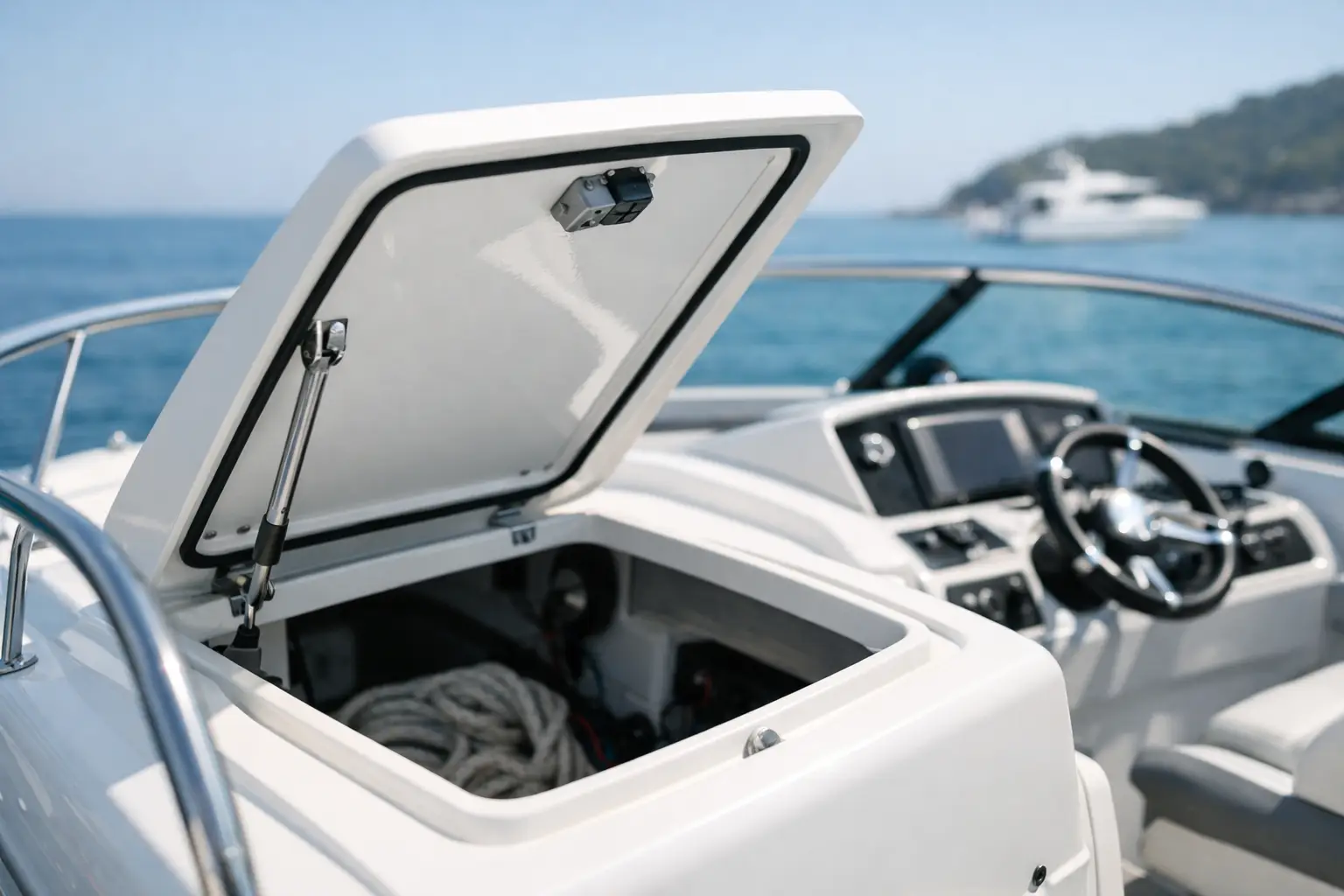
A hatch left cracked open after a quick fuel stop can turn into a soaked cabin, stolen gear, or a boat full of rainwater by morning. That is why a boat hatch open alarm is not a convenience feature. It is an early-warning layer that helps you catch a small oversight before it becomes an expensive repair, insurance claim, or security problem.
For many owners, hatches are easy to forget because they sit outside the usual engine-bilge-battery checklist. You can secure shore power, verify battery voltage, and still leave a forward hatch or lazarette access point unlatched. When the boat is unattended for days or weeks, that gap matters. A hatch alarm gives you immediate awareness, which is the part most boats are missing.
What a boat hatch open alarm actually protects against
Most people first think about theft, and that is fair. An open or unlatched hatch can be an easy entry point, especially at marinas, dry storage yards, and docks where foot traffic comes and goes. But security is only part of the story.
An open hatch also exposes the boat to weather and moisture. A short rain event can soak cushions, flooring, electronics, and stored gear. If the hatch is positioned where water finds its way into a compartment, the problem can grow from mildew and interior damage to electrical faults and bilge cycling. On some boats, one unnoticed opening can affect ventilation, humidity, and cabin condition for days.
Then there is the simple operational issue of not knowing the boat’s actual status when you are away. If you trailer the boat, store it between trips, or leave it at a marina for part of the season, you need visibility without being onboard. A boat hatch open alarm closes that blind spot.
Why simple local alarms are often not enough
A basic audible alarm can help if you are nearby. If the boat is in your driveway and you can hear it, that may be enough for a short period. But many owners are not standing within earshot of their vessel. They are at home, at work, traveling, or several states away.
That is where local-only systems fall short. A horn or siren on the boat cannot help much if no one is there to hear it, verify the problem, and act. Consumer-grade contact sensors can also struggle in marine environments. Salt exposure, moisture, vibration, and inconsistent power conditions are hard on generic hardware.
A better approach is remote alerting through a dedicated marine monitoring system. Instead of making noise at the dock and hoping someone notices, the system sends a notification directly to you. That shift matters because speed matters. The faster you know a hatch is open, the faster you can call the marina, ask a captain or neighbor to check the boat, or head down yourself.
How a connected boat hatch open alarm works
At the most basic level, a hatch alarm uses a sensor to detect whether the hatch is closed or open. When the hatch changes state, the onboard controller records that event and sends an alert through the boat’s communication path, typically cellular, Wi-Fi, or both.
The real value is not the sensor by itself. It is the full alert chain. Detection has to be reliable. The controller has to stay powered. Connectivity has to be available. The alert has to reach you in a way you will actually notice.
That is why serious boat owners should look beyond the phrase hatch alarm and evaluate the full monitoring stack. Marine-grade hardware, protected wiring, dependable network backup, and multiple alert methods all matter. If the system cannot notify you when you are offsite, it is solving only half the problem.
Boat hatch open alarm features that are worth paying for
Not every vessel needs the same setup. A center console used every weekend has different risk patterns than a cruiser sitting unattended for a month. Still, there are a few features that make a clear difference.
Remote notifications are the first non-negotiable. Push alerts are useful, but SMS and email add another layer. For higher-value vessels or longer unattended periods, phone-call escalation is even better. The point is simple: if a hatch opens, you should know fast and through more than one channel.
Reliable connectivity matters just as much. Boats move between marinas, storage lots, and anchorages, and signal conditions change. A system that can use cellular and Wi-Fi gives you stronger coverage than one that relies on a single path.
Sensor expandability is also important. A hatch alert works best as part of a broader protection strategy. If a hatch opens during a storm and water gets in, you also want visibility into bilge activity, battery condition, humidity, shore power status, or water intrusion. Problems on boats rarely stay isolated.
Installation quality deserves more attention than it usually gets. Boats are harsh electrical environments. ABYC-aligned wiring practices, proper power protection, and marine-rated components help reduce nuisance alerts and failures. If a sensor is installed poorly or a wire run is vulnerable, the best app in the world will not save the system.
Where hatch alarms make the biggest difference
The best use case is any period when the boat is unattended. That includes marina slips, seasonal storage, hurricane season prep, travel periods, and boats managed from a second home. It also applies to tender garages, flybridge access hatches, lazarettes, and equipment compartments that are opened during maintenance and forgotten later.
Open hatch alerts are especially valuable on larger boats with multiple access points. The more complex the vessel, the easier it is for one hatch to be missed during a departure checklist. On multi-vessel properties, that risk multiplies. A manager cannot physically inspect every compartment every day, so remote status becomes operationally useful, not just convenient.
There is also a security benefit in lower-traffic environments. Boats stored in remote yards or less active docks may sit for long stretches without anyone noticing an open access point. A connected alarm shortens that exposure window.
It depends on the boat, the owner, and the response plan
A hatch alarm is not a magic shield. Its value depends on how the boat is used and what happens after the alert arrives. If you keep the vessel five minutes from home, your response may be simple. If the boat is in another state, your plan may involve marina staff, a captain, or a service provider.
This is why the best monitoring setups are built around response, not just detection. Ask a practical question: if the system tells me a hatch is open at 2:13 a.m., what do I do next? The answer should be clear before you install anything.
Some owners only need awareness. Others want integrated oversight that covers hatches, doors, location, batteries, bilge, tanks, and onboard systems in one dashboard. If you are already investing in remote vessel protection, folding hatch monitoring into that platform usually makes more sense than adding another standalone gadget.
Why integration beats pieced-together devices
A single-purpose alarm can look cheaper at first. The trade-off is fragmentation. One app handles hatches, another handles location, another handles a camera, and none of them share context. When something goes wrong, you are left assembling the story yourself.
Integrated monitoring is different. If a hatch opens, you can also see whether the boat lost shore power, whether humidity is climbing, whether the bilge pump is running more often than normal, or whether the vessel changed position. That context helps you decide whether this is a minor oversight or the start of a larger incident.
For owners who want dependable remote protection, that is the real upgrade. You are not just being told that a hatch is open. You are being given enough visibility to respond intelligently. Systems built for marine use, such as EverWatch, are designed around that exact need – watch, detect, and respond.
A boat hatch open alarm does one job very well when it is part of a serious monitoring system: it turns a hidden risk into a visible event. On the water, that small shift is often what prevents the bigger problem.
 2-Year Warranty
 30-Day Money-Back Guarantee
 U.S.-Based Support