
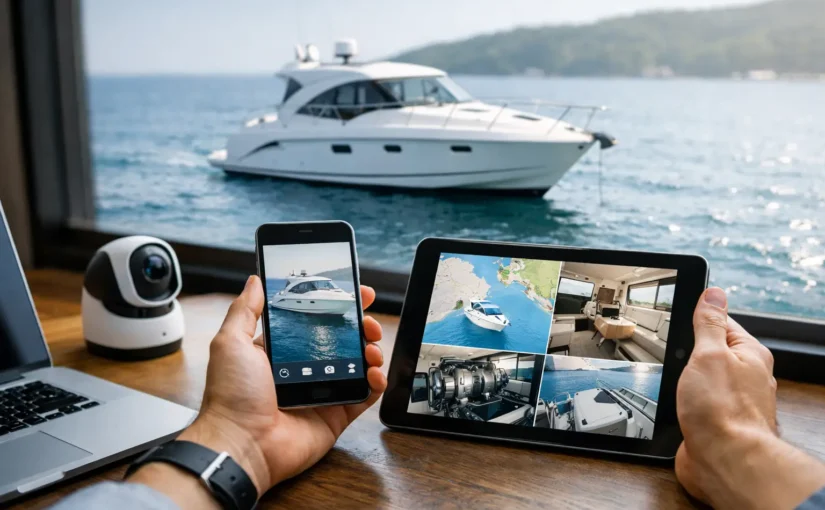
A shore power breaker trips at 2:13 a.m. The battery charger goes offline. By sunrise, batteries are low, refrigeration is warming up, and the bilge pump is working harder than it should. That is exactly why boat owners ask how to monitor a boat remotely. The right system gives you visibility when you are not at the dock, not on the mooring, and not even in the same state.
Remote boat monitoring is not one feature. It is a layered system that watches the conditions most likely to turn into expensive damage, theft, or a ruined weekend on the water. If you want real protection, you need more than a GPS puck and more than a single battery alert.
How to monitor a boat remotely the right way
Start with the risks you actually need to catch early. For most unattended boats, that means shore power failure, battery voltage drop, bilge activity, water intrusion, temperature swings, humidity, unauthorized entry, and unexpected movement. If the boat is at anchor or on a mooring, position alerts and anchor watch matter even more. If it is a larger vessel or a more technical installation, engine, tank, and onboard network data can also be part of the picture.
That is the difference between a true monitoring system and a collection of gadgets. One tells you the boat moved. The other tells you why a problem is developing before the boat is in trouble.
A complete setup usually includes a central onboard controller, connected sensors, off-boat communication, and a mobile app that pushes alerts to you immediately. The best systems also let you choose how alerts arrive, whether that is push notification, text, email, or phone call. If you miss one channel, another should still get through.
The core systems worth monitoring first
If you are building a remote monitoring strategy, start with the systems that create the biggest losses when they fail quietly.
Shore power and battery health
Shore power loss is one of the most common marina-side problems. A disconnected cord, tripped pedestal breaker, charger fault, or dock outage can cascade fast. Once charging stops, battery voltage drops. Then refrigeration, security devices, pumps, and other onboard systems begin to suffer.
A remote monitoring system should detect both shore power status and battery condition. Voltage alone is useful, but the best setups give you enough context to know whether this is a momentary dip or a developing outage. Early notice gives you time to call the marina, a captain, or a service tech before a simple power issue becomes a dead-boat problem.
Bilge activity and high water
Bilge pump alerts matter because they tell you what your eyes cannot. A pump cycling more often than normal may point to a leak, failed float switch behavior, rainwater intrusion, or a plumbing issue. A high-water alarm raises the stakes. At that point, you are no longer tracking a maintenance problem. You are tracking a threat to the vessel.
Remote visibility here is not optional if the boat sits unattended for days or weeks at a time. You want to know when the pump runs, how often it runs, and when water reaches an abnormal level.
Location, movement, and theft detection
GPS tracking is valuable, but only when paired with alerts that match how the boat is supposed to be used. A geofence can tell you if the vessel leaves the marina, shifts from its storage yard position, or moves unexpectedly while moored. If the boat is anchored, anchor-drag alerts help you respond before a bad night turns into grounding or collision damage.
For theft prevention, movement alerts should be immediate and specific. If a trailer boat changes location or a yacht leaves a defined perimeter, minutes matter.
Doors, hatches, and onboard environment
A remote monitoring system should also watch access points and interior conditions. Door and hatch sensors can alert you to unauthorized entry. Temperature and humidity monitoring can flag HVAC failures, freezer loss, mold-promoting moisture, or conditions that threaten electronics and soft goods.
This is especially important for seasonal owners and anyone leaving a boat closed up in southern heat, northern cold, or damp shoulder seasons. Environmental issues build slowly, but the repair bills do not stay small for long.
Connectivity matters more than most boaters think
A sensor is only useful if it can report. That is where many DIY setups fall apart. Boats do not live in stable home-network conditions. Marinas have inconsistent Wi-Fi. Storage yards may not have any. Anchorages are their own challenge.
For dependable remote monitoring, the communication path needs to fit the boat’s real environment. Cellular connectivity is often the backbone because it works beyond the dock and does not depend on the marina’s network staying up. Wi-Fi can still add value, especially where strong local coverage exists. A dual-connection approach gives you better continuity and more confidence that alerts will still get out.
This is one of those areas where marine-specific design matters. Consumer smart-home devices were not built for wet bilges, vibration, voltage variation, or intermittent connectivity. On a boat, failure to report is its own failure mode.
How much data is enough?
Not every owner needs full vessel telemetry. Some need a simple watch list: power, batteries, bilge, and GPS. Others want a broader operating picture that includes tank levels, engine data, generator status, and transmission information over NMEA2000.
The right answer depends on how you use the boat and how often it sits unattended. A center console in dry storage has different priorities than a diesel cruiser in a slip year-round. A managed fleet or multi-vessel operation needs consistency across boats and the ability to spot issues without checking each vessel manually.
More data is helpful when it leads to faster decisions. More data is not helpful if it is hard to interpret or buried in a clumsy app. The system should show you what changed, why it matters, and how urgently you need to act.
Installation is not the place to cut corners
If you are serious about protecting the boat, pay attention to installation quality. Marine electrical systems are unforgiving of shortcuts. Wiring practices, fuse protection, mounting location, sensor placement, and corrosion resistance all affect whether the system performs when conditions turn ugly.
Look for marine-grade hardware and installation standards aligned with ABYC practices. That does not just sound good on paper. It matters when a device lives in heat, moisture, vibration, and salt exposure. Reliable monitoring starts with reliable power, clean wiring, and sensors installed where they can detect problems early instead of late.
Expandable architecture also matters. Many owners start with a few high-priority alerts and add more coverage later. A system that can grow with the boat saves time and avoids the patchwork mess of separate apps and disconnected devices.
What good remote alerts should actually do
A useful alert is clear, fast, and actionable. It should tell you what happened, when it happened, and whether the condition resolved or is still active. Better systems let you set thresholds that fit your boat rather than forcing generic defaults.
That matters because too many nuisance alerts will train you to ignore the app. Too little sensitivity and the system tells you after the damage is already done. Good monitoring finds the middle ground. It watches continuously, reports the exceptions, and gives you enough context to respond with confidence.
For many owners, multi-channel alerting is worth it. A push notification is easy to miss. Text, email, and phone call escalation can be the difference between seeing an issue in ten minutes and seeing it the next morning.
A practical setup for most unattended boats
If you are deciding how to monitor a boat remotely, begin with a controller connected to shore power monitoring, battery sensing, bilge pump activity, high-water detection, GPS location, and interior temperature. Add hatch or door sensors if theft or unauthorized access is a concern. Add humidity if the boat is stored closed up. Add NMEA2000 data if you want engine, tank, or generator visibility in the same system.
That combination covers the incidents that cause the most common and most expensive surprises. It also gives you a better operating picture than trying to piece together a tracker from one brand, a battery alarm from another, and a standalone camera that stops working when the dock Wi-Fi drops.
A purpose-built platform such as EverWatch is designed for exactly this kind of layered oversight, combining marine-grade hardware, onboard sensors, app access, and persistent alerting into one system boat owners can actually depend on.
Remote monitoring will not replace regular inspections or good marina relationships. It will not fix a failed pump or reset a tripped breaker by itself. What it does is shorten the time between problem and response. On a boat, that time window is where damage grows.
If your vessel spends any meaningful time unattended, the real question is not whether you can monitor it remotely. It is whether you are willing to leave it unguarded when the warning signs are easy to catch.