
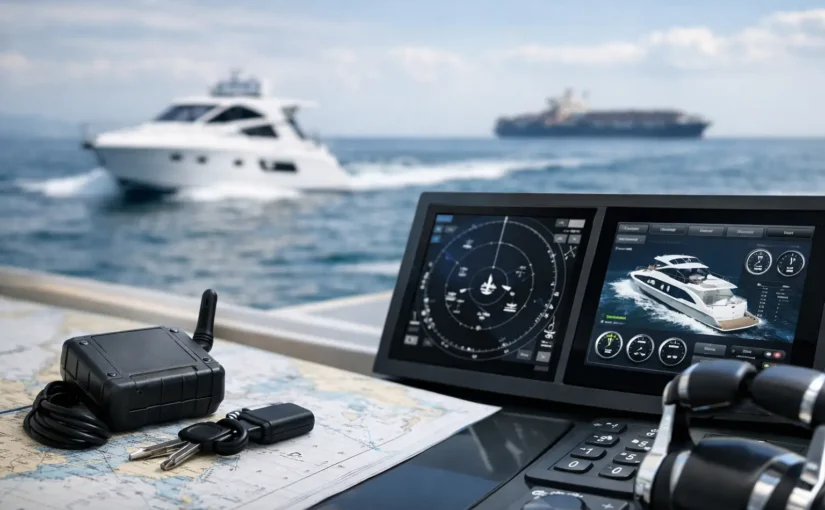
A boat can stay exactly where you left it and still be in trouble. Shore power can fail. Batteries can drop. Bilge pumps can start cycling. A hatch can open. Water can get in. That is the real issue behind marine tracker versus monitoring – one tells you where the vessel is, while the other tells you what is happening onboard.
For many boat owners, that difference only becomes clear after a close call. A GPS pin on a map feels reassuring until the boat is taking on water at the dock, the charger has gone offline, or the cabin is overheating in summer storage. Position matters, but position alone does not protect systems, equipment, or the boat itself.
Marine tracker versus monitoring: the core difference
A marine tracker is usually built around location. Its main job is to report GPS position, movement, route history, and sometimes geofencing. If the boat leaves a defined area, the owner gets an alert. That is useful for theft recovery, unauthorized movement, and basic fleet visibility.
A boat monitoring system is broader by design. It watches the vessel’s condition, not just its coordinates. That can include shore power status, battery voltage, bilge activity, high water, temperature, humidity, doors, hatches, anchor status, tank levels, and engine data. A proper system also sends alerts in real time so the owner can act before a small issue becomes a repair bill.
The simplest way to think about it is this: tracking answers where. Monitoring answers what, when, and how urgent.
That distinction matters most when the boat is unattended. Most serious problems do not start with movement. They start quietly, with a dead battery bank, failed AC power, water intrusion, or an abnormal pump cycle that nobody sees until damage is done.
Why a tracker alone leaves blind spots
A tracker can be the right tool for a narrow job. If your main concern is knowing whether a trailer boat moved or a vessel left its mooring, GPS-based tracking covers that scenario. It is focused and often simple to use.
But most owners are not trying to solve a single problem. They are trying to reduce risk across the full range of things that happen when a boat sits at a dock, in dry storage, or on anchor. A tracker does not usually tell you if shore power dropped at 2:00 a.m. It does not tell you the house bank is draining below a safe threshold. It does not tell you the bilge pump has run six times in an hour or that the cabin temperature is high enough to threaten onboard equipment.
This is where many buyers get tripped up. They assume visibility equals protection. It does not. Seeing the boat on a map is one form of visibility. Knowing the boat is dry, powered, charged, and secure is another.
There is also a response problem. By the time a tracker shows a vessel moved unexpectedly, the event is already underway. Monitoring is built for earlier detection. If a battery is failing, if water intrusion starts, or if a freezer circuit goes down, those warnings come before the situation reaches the point of obvious loss.
What full boat monitoring actually covers
Good marine monitoring is not one sensor and one alert. It is a connected oversight system that checks multiple points of failure at once.
For docked boats, shore power monitoring is one of the biggest value drivers. Losing AC power can trigger a chain reaction – chargers stop, batteries decline, refrigerators warm up, dehumidifiers shut off, and onboard systems lose support. Getting that alert early gives the owner or marina time to restore power before the boat suffers secondary damage.
Bilge and water intrusion alerts matter for a different reason. They indicate a condition that can escalate fast. A high-water alert or unusual bilge pump activity is not a maintenance reminder. It is an early warning that the vessel may be dealing with a leak, rainwater ingress, plumbing issue, or failed component.
Battery monitoring is equally practical. Low voltage can disable security devices, pumps, and starting systems long before the owner returns to the boat. Temperature and humidity monitoring help protect interiors, electronics, and comfort systems, especially in seasonal climates. Door and hatch alerts add a security layer that simple tracking cannot provide.
For more advanced owners, integration matters too. NMEA2000 support allows monitoring to reach into engine, transmission, and tank data. That turns the system from a basic alarm package into a real vessel status platform.
Marine tracker versus monitoring for different boat owners
The right choice depends on how the boat is used, where it is kept, and how much risk the owner is carrying.
If you keep a small trailer boat at home and your biggest concern is theft during transport or off-season storage, a tracker may cover the main need. If the boat does not sit plugged into shore power and has minimal onboard systems, condition monitoring may not be the first priority.
If your boat lives in a marina slip, the calculus changes fast. Dockside power issues, bilge events, battery drain, and environmental conditions become much more relevant. A tracker may tell you the boat never moved, but that does not help if the charger failed Friday night and the batteries are flat by Sunday morning.
For larger recreational boats and yachts, monitoring becomes even more valuable because there are more systems to watch and more cost tied to downtime. HVAC, refrigeration, battery banks, generators, inverters, tank systems, and engine data all create more points where early detection saves money.
Multi-vessel operators face a scale problem. A tracker-only setup might provide map visibility across a fleet, but fleet managers usually need operational awareness too. They need to know which vessel lost power, which one has a pump issue, and which one triggered a security event. Monitoring supports action, not just observation.
Connectivity and alerting are part of the answer
One reason some marine systems underperform is that they focus on sensors but ignore delivery. An alert only matters if it reaches someone in time.
That means connectivity should be treated as part of the monitoring system, not an afterthought. Boats move between marinas, yards, storage buildings, and anchorages. Coverage conditions change. A system that can work across cellular and Wi-Fi gives the owner more consistent oversight than one tied to a single communication path.
Alerting should also be flexible. Push notifications are convenient, but serious events may call for SMS, email, or even phone calls. Different owners manage risk differently. Some want every status change. Others only want high-priority exceptions. The system should support both.
This is one of the reasons a marine-specific platform stands apart from generic consumer trackers or pieced-together smart devices. Boats are harsh environments. Wiring practices matter. Enclosures matter. Sensor expandability matters. So does support from people who understand shore power faults, NMEA2000 networks, and the realities of unattended vessels.
When monitoring is the better investment
If the cost of a missed event is high, monitoring is usually the better investment. That includes boats with expensive electronics, larger battery banks, permanent dockage, high-end interiors, refrigerated systems, or owners who travel often and cannot check the vessel in person.
It also makes sense for seasonal owners. Boats sitting through weather swings, heat, freezes, and long idle periods need more than a location ping. They need ongoing oversight. A vessel can be technically secure from theft and still suffer thousands of dollars in avoidable damage.
A system like EverWatch is built around that reality. It combines marine-grade hardware, remote app visibility, expandable sensors, and real-time alerts so owners can see more than a map pin. They can see whether the boat is powered, dry, secure, and operating within safe limits.
That does not make tracking irrelevant. GPS position, geofencing, and movement alerts are still valuable features. They just work best as part of a wider monitoring strategy, not as a substitute for one.
The best question is not whether your boat can be found. It is whether you will know something is wrong before the damage is done. If you want real control while you are away, choose the system that watches the whole boat, not just where it sits.