
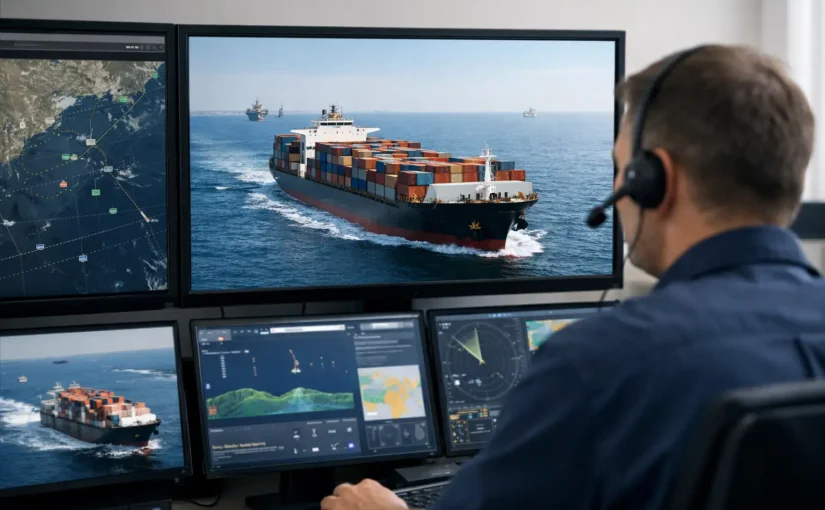
A dead shore power cord at 2:13 a.m. can turn into drained batteries, failed refrigeration, humidity damage, and a bigger service bill by morning. That is why a vessel monitoring platform matters. It gives you eyes on the boat when you are not there, and more importantly, it gives you time to act before a small issue becomes an expensive one.
For most owners, the real value is not the app screen. It is early warning. Boats sit unattended for long stretches at marinas, on lifts, in storage yards, and on anchor. During that time, the risks are predictable: shore power can fail, bilge pumps can cycle too often, batteries can sag, a hatch can be left open, water can get where it should not, and a boat can move when it absolutely should not. A serious monitoring system is built to detect those conditions fast and notify the right people in a way they will actually see.
What a vessel monitoring platform is really for
At its core, a vessel monitoring platform is a remote oversight system for critical boat conditions. It combines onboard hardware, sensors, connectivity, and alerts into one operating view. Done right, it is not a generic tracker with a map pin. It is a marine-specific system designed around the failures that damage boats.
That distinction matters. Consumer GPS devices can tell you where a boat is. A basic battery monitor can show voltage. A standalone bilge alarm can scream at the dock. None of those tools gives you a unified picture, and none is especially helpful if the alert never reaches you when you are offsite.
A proper platform watches multiple systems at once. It can track shore power status, battery health, bilge activity, high water, water intrusion, temperature, humidity, doors, hatches, GPS position, geofencing, and anchor status. For owners who want more depth, NMEA2000 integration can add engine, transmission, and tank data. That is the difference between isolated gadgets and actual protection.
The risks that justify the investment
Boat problems rarely announce themselves at a convenient time. They build quietly. A failing charger, a tripped breaker, a leaking hatch seal, or a stuck float switch can sit unnoticed for hours or days if nobody is physically checking the vessel.
Shore power loss is one of the most common examples. If AC power drops and no one knows, batteries begin to carry loads they were not meant to support for long. Refrigeration may shut down. Dehumidification stops. Sensitive electronics can be affected. If freezing weather hits while systems are down, the cost can escalate quickly.
Bilge and water events are even more urgent. One extra bilge cycle may mean nothing. Repeated cycling can point to a leak, a failed hose, or rising water. If you catch that trend early, you can send someone to inspect the boat before the pumps are overwhelmed. If you find out late, you are dealing with damage control instead of prevention.
Unauthorized movement is another category owners tend to underestimate until it happens. A vessel can break loose, be moved without permission, drift on anchor, or be stolen. Location monitoring only helps if it is paired with fast, reliable alerts and clear movement rules. A map without response logic is just after-the-fact information.
What to look for in a vessel monitoring platform
The first requirement is marine-grade hardware. Boats are wet, corrosive, vibration-heavy environments. A system built for a garage, RV, or consumer smart home may work for a while, then fail exactly when you need it. Hardware should be designed for vessel conditions and installed with marine wiring practices in mind.
The second requirement is dependable connectivity. This is where many systems fall short. If your monitor relies on a single communication path, then the monitor itself can go blind. Dual connectivity matters. Cellular and Wi-Fi together provide more resilience than either one alone, especially for boats that move between marinas, moorings, storage, and anchorages.
The third requirement is sensor flexibility. No two boats are rigged the same way, and no two owners care about exactly the same data set. A center console in dry storage, a cruising yacht on shore power, and a multi-vessel operation with mixed assets all need different monitoring profiles. Expandable sensor architecture gives owners room to start with the essentials and add coverage where risk is highest.
The fourth requirement is serious alerting. Push notifications are useful, but they are not enough by themselves. Phones get silenced. Apps get buried. A platform should support multiple alert channels such as push, text, email, and phone calls, with escalation when needed. If the condition is urgent, the notification path should be urgent too.
Why integration matters more than adding gadgets
Many owners already have some pieces in place. Maybe there is a battery app, a separate GPS tracker, and a marina camera pointed toward the slip. That patchwork can create a false sense of coverage.
The problem is coordination. When systems live in separate apps and separate workflows, alarms are easier to miss and harder to interpret. If the shore power drops, batteries start falling, and humidity rises, those events should appear as part of one operating picture. That context helps owners decide whether they are dealing with a nuisance, a maintenance issue, or a developing emergency.
This is also where NMEA2000 support becomes valuable for more advanced users. Engine hours, transmission data, and tank levels are not just convenience metrics. They add context to vessel status and can support smarter maintenance decisions. For a hands-on owner or fleet operator, that deeper view can save unnecessary trips while highlighting issues that deserve immediate attention.
Installation and safety are not side notes
A vessel monitoring platform is only as dependable as its installation. That is not marketing language. It is reality. Poor wiring, weak connections, and casual power sourcing can create nuisance alarms at best and safety problems at worst.
This is why ABYC-aligned installation practices matter. Monitoring hardware should be integrated in a way that respects marine electrical standards, protects the vessel, and supports long-term reliability. If a platform is meant to watch over critical systems, it cannot be treated like an afterthought accessory.
Owners should also think about physical placement. Sensors need to be installed where they can accurately detect the condition they are supposed to monitor. A water sensor in the wrong compartment tells you nothing useful. A temperature sensor in a misleading location creates bad decisions. Good platform design helps, but correct installation finishes the job.
Who benefits most from constant remote oversight
Seasonal owners are an obvious fit because their boats may sit for weeks between visits. But they are not the only ones who benefit. Traveling owners who leave a boat behind during work trips need the same visibility. So do marina-kept owners who assume the dock environment is stable until a storm, outage, or neighboring boat issue proves otherwise.
Multi-vessel operators have an even stronger case. Once you are responsible for more than one asset, manual check-ins become inconsistent and expensive. Centralized monitoring helps prioritize attention. Instead of checking every boat the same way, you can respond where the data says risk is rising.
Even owners who are at the boat often can benefit. Most damage does not happen while you are standing in the cockpit. It happens between visits. Monitoring closes that gap.
The trade-off: cost versus cost of not knowing
A quality monitoring system is not the cheapest item you will add to a boat. There is hardware, installation, and an ongoing service component if you want connectivity and active alert delivery. For some owners, that prompts the obvious question: is it worth it?
That depends on the boat, where it is kept, and how often it sits unattended. A small trailer boat parked at home may need far less coverage than a larger vessel left in the water year-round. But for boats exposed to shore power dependency, weather, theft risk, or long gaps between inspections, the real comparison is not system cost versus zero cost. It is system cost versus a single preventable loss event.
One battery failure, one unchecked leak, or one unauthorized movement incident can easily outweigh years of monitoring service. That does not mean every boat needs every sensor. It means coverage should match risk.
EverWatch Systems approaches this the right way: marine-grade hardware, expandable sensing, dual LTE and Wi-Fi connectivity, and alerts built for real response, not passive data collection. That is what owners should expect from any platform they trust with an unattended vessel.
A boat does not need more gadgets. It needs a system that watches the right conditions, speaks up fast, and keeps watch when no one else is aboard. Choose the platform that helps you act early, because that is when boat problems are still manageable.


 2-Year Warranty
 30-Day Money-Back Guarantee
 U.S.-Based Support