
A dead battery bank, a tripped shore power pedestal, a stuck bilge pump, or an open hatch in a rainstorm can turn into a major repair bill long before the next marina visit. That is the real answer behind the question, what does a boat monitoring system do: it keeps watch when you cannot, detects problems early, and gives you time to respond before minor issues become vessel-threatening events.
For many owners, the risk is not dramatic weather or a catastrophic failure. It is the quiet, expensive stuff. A charger goes offline. Humidity climbs in storage. Water starts collecting in the bilge. A boat shifts outside its expected position. Most of these events start small. The value of a monitoring system is that it notices those changes right away and sends the alert while there is still something useful you can do.
What does a boat monitoring system do on a real boat?
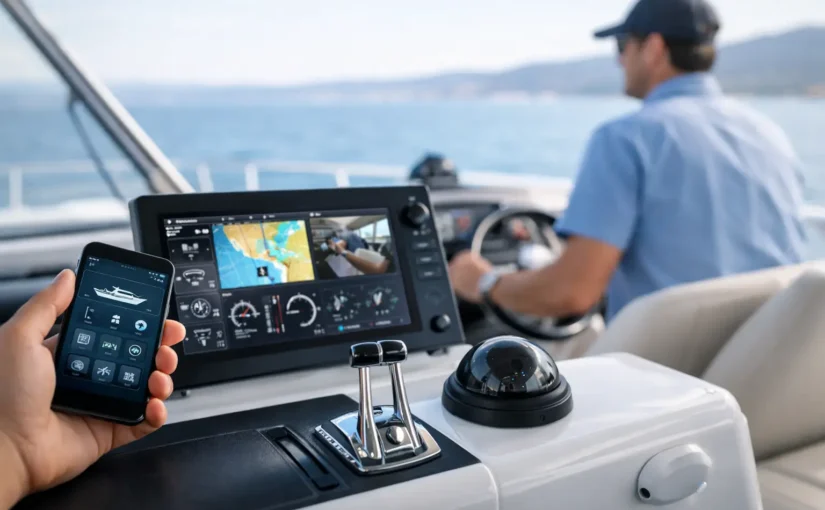
At its core, a boat monitoring system watches critical onboard systems and reports what is happening remotely. That usually means a controller installed on the vessel, connected sensors, and a mobile app or dashboard that shows status, trends, and alerts.
A good system is built around prevention. It monitors the conditions most likely to cause damage, downtime, theft, or missed maintenance. On a marina-kept boat, that often starts with shore power, battery voltage, bilge activity, and high-water detection. On an anchored or moored vessel, GPS position, geo-fencing, anchor movement, and battery health may matter more. In storage, temperature, humidity, and unauthorized access can be the bigger concern.
The point is not just to collect data. The point is to turn vessel conditions into actionable awareness. If shore power drops, you want to know now, not after your batteries are depleted and refrigeration is down. If the bilge pump starts cycling more often than normal, you want that pattern flagged before it becomes flooding.
The systems a boat monitor usually watches
Power monitoring is one of the most important jobs. Boats rely on stable electrical support for chargers, pumps, refrigeration, security devices, and battery maintenance. A monitoring system can detect loss of shore power, low battery voltage, charging issues, and in some installations generator or inverter-related status. That matters because electrical failures often trigger a chain reaction instead of a single inconvenience.
Bilge and water intrusion monitoring are another major layer of protection. If a pump activates unexpectedly or runs too often, that may point to a leak, failed float switch, plumbing issue, or incoming water. A dedicated high-water sensor adds another line of defense by warning you when water rises beyond normal pump management. For many owners, this is one of the clearest reasons to install a system at all.
Location monitoring adds security and accountability. GPS tracking can show where the boat is, whether it has moved outside a set geo-fence, or whether it may be dragging anchor. That is useful for theft prevention, but also for practical oversight when a vessel is on a mooring, at a yard, under transport, or being managed remotely.
Environmental monitoring rounds out the picture. Cabin temperature and humidity can affect electronics, interiors, soft goods, and mold risk. Door and hatch sensors can indicate unauthorized access or simply show that something was left unsecured. These may sound secondary until a small oversight leads to water damage, interior deterioration, or a security incident.
For owners with more advanced systems onboard, engine, transmission, and tank data can also be brought into the same monitoring environment through NMEA2000 integration. That gives remote visibility into operating data that would otherwise stay trapped at the helm. It is especially useful for larger yachts, active cruisers, and fleet-style operators who want one system watching more than just alarms.
Alerts matter more than data alone
A monitoring system is only as useful as its ability to get your attention. Raw data on a screen does not help much if you are traveling, asleep, or simply not checking the app.
That is why serious marine monitoring platforms are built around event-based alerts. When a condition crosses a threshold, the system pushes a notification immediately. Depending on the setup, that can include app notifications, text messages, emails, and phone calls. Different owners want different escalation paths. A casual day boater may be fine with app alerts, while a yacht owner with crew, service providers, or multiple vessels may want layered notifications that are hard to miss.
There is also a practical difference between a consumer gadget and a marine-specific alert platform. Boats live in corrosive, vibrating, wet environments. Connectivity can be inconsistent. Sensor logic needs to account for normal vessel behavior so owners are not flooded with nuisance alerts. The best systems are designed to reduce false alarms while still reacting fast when something truly needs attention.
What a boat monitoring system does not do
It does not physically stop a leak, reconnect shore power, replace a failed battery, or close an open hatch. That distinction matters.
A monitoring system is an early-warning and visibility tool. Its job is to shorten the time between problem onset and owner response. In some cases, that response is you driving to the marina. In others, it is a captain, yard manager, dockmaster, or service tech getting involved before damage spreads.
This is where buyers sometimes get confused. They expect the system itself to be the fix. It is not. Its real value is that it changes the timing. And in marine incidents, timing is often the difference between a quick correction and a major claim.
Why remote visibility changes boat ownership
Most boat problems happen when nobody is onboard. That is true for a center console on a lift, a cruiser in a marina slip, or a yacht sitting through a storm front while the owner is out of town.
Remote monitoring changes the ownership experience because it removes the blind spot. You no longer have to wonder whether shore power is still on after a storm, whether the batteries are holding charge during winter storage, or whether the bilge pump started cycling overnight. You can check status from your phone and, more importantly, get told when something changes.
That kind of visibility is not just about peace of mind. It supports better maintenance decisions. Repeated alerts can reveal developing issues before they become obvious during a weekend outing. A pattern of low voltage may point to battery aging. Frequent bilge activity may reveal a leak that would have gone unnoticed. Rising humidity may signal ventilation or sealing problems during layup.
Over time, those patterns help owners become more proactive instead of reactive.
Not all boat monitoring systems do the same job
This category can look simple from the outside, but the differences are significant. Some products are basically GPS trackers with a few add-ons. Others are general-purpose IoT devices adapted for marine use. Those can work for basic location awareness, but they may fall short when you need full-vessel oversight.
A true marine monitoring system should be designed for the electrical, environmental, and operational realities of boats. That includes marine-grade hardware, installation practices aligned with ABYC expectations, dependable connectivity options such as LTE and Wi-Fi, and an expandable sensor architecture that can grow with the vessel.
It also helps to think about who you are as an owner. If you only want a theft alert for a trailer boat, your needs are different from someone leaving a larger vessel unattended for weeks at a time. If you manage multiple boats, centralized visibility and alert routing become more important. If you are technically inclined, support for NMEA2000 data may be a deciding factor. If you just want a simple app view and fast alerts, usability may matter more than deep system customization.
That is why the best answer to what does a boat monitoring system do depends a little on the boat, the risk profile, and how often the vessel sits unattended. But the mission stays the same: watch critical systems, detect abnormal conditions, and help you respond fast.
For owners who want persistent oversight rather than occasional check-ins, systems like EverWatch are built for exactly that job – marine-specific monitoring, immediate alerts, and remote visibility that stays on duty when you are not.
A boat is easier to protect when problems have nowhere to hide. The right monitoring system gives you that edge, and that edge is often what saves the season.


 2-Year Warranty
 30-Day Money-Back Guarantee
 U.S.-Based Support